
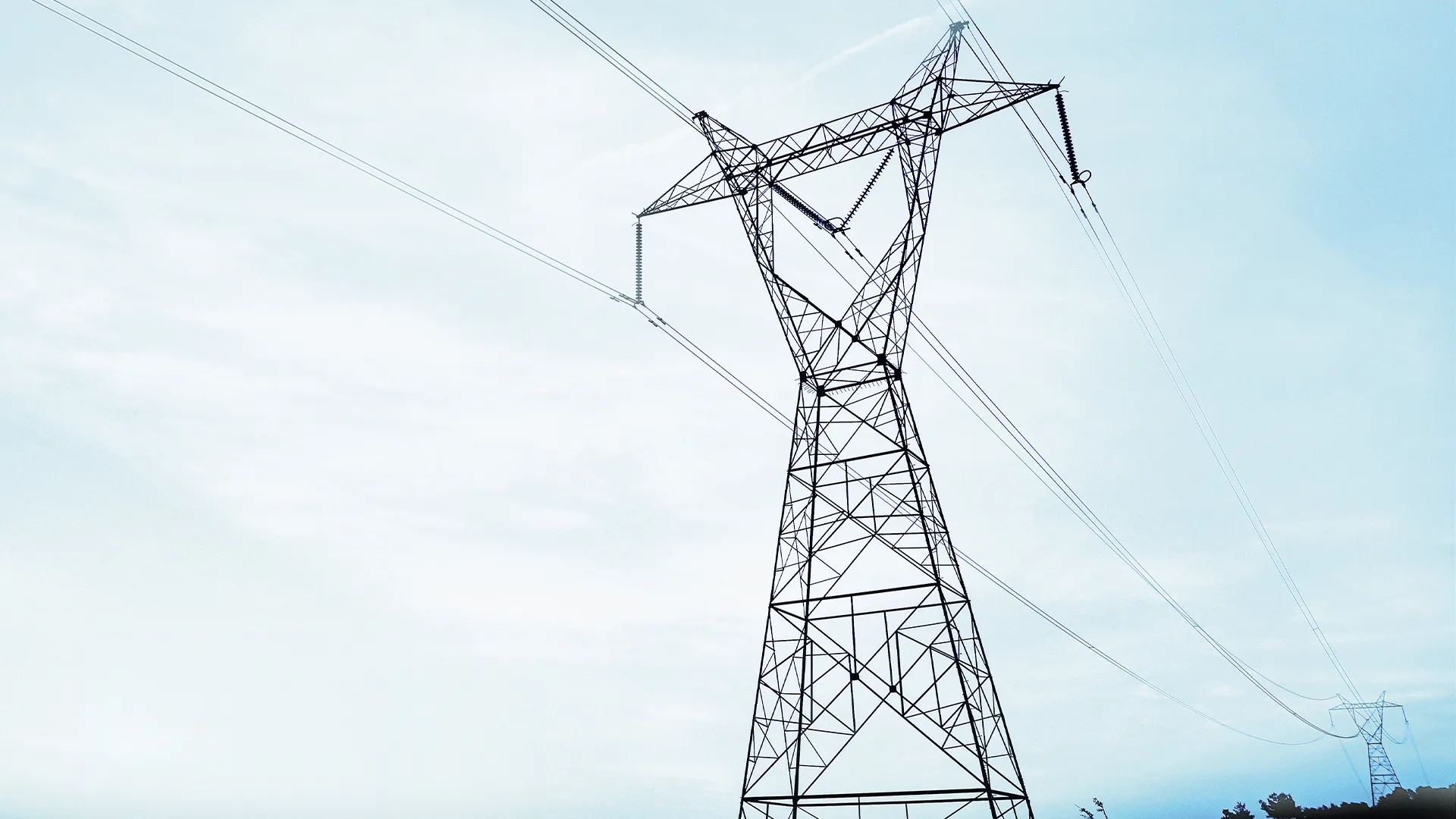
Will new converter technologies such as voltage source converters (VSC) make the tap-changer in HVDC systems superfluous? A study by the Technical University of Ilmenau has investigated this question.
High-voltage direct current (HVDC) transmission makes it possible to transport large amounts of energy – especially from renewable energy sources – over long distances to consumers with virtually no losses. To do this, converter stations convert the incoming AC voltage into DC voltage at the beginning of the HVDC lines and back into AC voltage at the end. For many years, grid operators relied on line-commutated converters (LCC) which work with thyristors that are dependent on the supply voltage of the AC grid for fault-free operation. This is where a regulated transformer comes into play, which connects the converter station to the AC grid. Here, a tap-changer regulates the input voltage precisely in discrete steps to ensure that the thyristors switch in the optimum range and that the operation of the converter remains stable.
New converter technology
However, with the introduction of converters using voltage source converter (VSC) technology, the significance of on-load tap-changers in HVDC systems is changing: this converter technology uses IGBTs, i.e. semiconductor elements that can switch independently and flexibly. This means that VSC converters can control voltage and current independently of the supply voltage of the AC grid and react to fluctuations in the power grid even without a regulated transformer. But does this mean the end of on-load tap-changers in modern HVDC systems?
Better switching
The answer is no. This is the conclusion of an independent study by TU Ilmenau, which looked at the characteristics of modern HVDC systems. The study shows that HVDC systems with VSC systems have higher losses when they are operated without a tap-changer in the transformer. The reason for this is the current flow through the semiconductor elements, which is often higher than necessary without targeted voltage regulation. The result: more heat loss and less usable energy. This is precisely where the on-load tap-changer comes in. It increases the voltage applied to the inverter based on the respective operating situation and in compliance with the permissible system limits, and does so in such a way that the current flow decreases while the power remains the same.
This significantly reduces losses and increases the energy yield. This pays off, especially for long transmission distances and large amounts of energy: More green energy reaches consumers, and operation becomes more efficient and economical. In addition, the lower thermal load reduces wear and extends the service life of the inverter components. And while these have to be replaced after around 15 years, on-load tap-changers last up to 60 years – an investment that pays off both ecologically and economically for grid operators in the long term.
Conclusion: Tap-changers will remain a key technology for HVDC systems in the future because there is currently no equivalent technical solution for precise voltage regulation during operation with maximum reliability and maximum service life. This is why Maschinenfabrik Reinhausen will continue to focus on the further development of on-load tap-changers for HVDC systems in the future – with modern control concepts, digital networking and the targeted use of artificial intelligence.
“On-load tap-changers simplify operational management”
Three questions for Prof. Dirk Westermann, who led the study at TU Ilmenau.

What general trends do you see for HVDC applications?
Several trends can currently be observed. More HVDC systems are needed because the expansion of renewable energies is increasing, and global electricity trading is also growing. In addition, there are continuous technological advances that are leading to more efficient and cost-effective HVDC systems, such as self-commutated modular multilevel converters in half- or full-bridge technology.
„On-load tap-changers do not increase the control effort in the system, but rather simplify operational management.“
Prof. Dirk Westermann
Will we even need on-load tap-changers in HVDC systems in the future?
Definitely. Although self-controlled inverters can take over a certain voltage regulation function, tap-changers give you the chance to implement improved control strategies and minimize losses.
Don’t HVDC systems become more vulnerable with additional components such as on-load tap-changers?
No, because on-load tap-changers have been tried and tested for decades and have a long service life and very low susceptibility to faults, especially with established manufacturers. In addition, on-load tap-changers do not increase the control effort in the system, but rather simplify operational management.

YOUR CONTACT PERSON
Do you have questions about on-load tap-changers in HVDC applications?
Daniel Raab is here for you:
D.Raab@reinhausen.com

