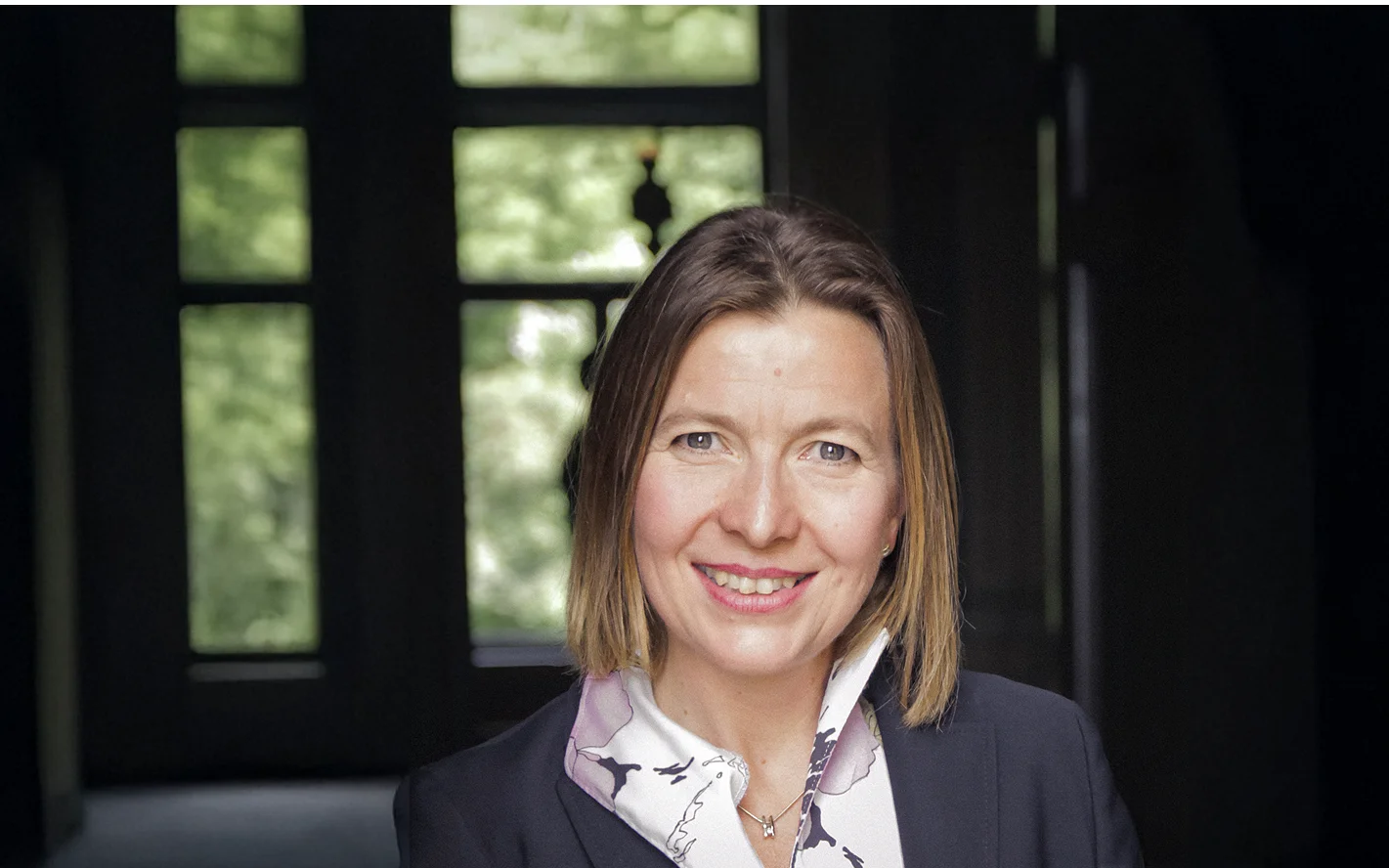
In this guest article, Norwegian engineer and CIGRE Vice President Technical, Rannveig S. J. Løken, explains the founding of CIGRE, the world’s leading organization for knowledge exchange in the field of power supply, and the importance of cooperation with experts in organizations such as Reinhausen.
When hundreds of incandescent light bulbs illuminated the Palais de l’Industrie at the “First International Electricity Exhibition” in Paris in 1881, it caused a sensation: never before had a building in Europe been so brightly lit! The exhibition gave electrification an enormous boost and helped to spread the then–new technology around the globe–albeit not everywhere at the same pace. After the First World War, energy demand rose sharply–factories were converted and, increasingly, machines were no longer powered by steam and coal, but by electric motors. But even in major cities such as Paris, Berlin, London, and New York, where streetlights illuminated the boulevards at night and electric trams rolled along the tracks, not every resident had access to electricity at the beginning of the 1920s. The countryside was particularly dark at night–in many places, electricity had not yet arrived.
In order to supply more people with electricity and meet the growing demand from industry, comprehensive power grids were urgently needed. However, there was a lack of standards and norms to accelerate expansion. And the exchange of knowledge among experts was also patchy. A group of engineers decided to change that. In November 1921–40 years after the memorable exhibition and also in Paris–they founded the Conseil International des Grands Réseaux Électriques (International Council on Large Electric Systems), or CIGRE for short. The aim of this non-profit organization was, and still is today, to promote the international exchange of knowledge between experts from industry, researchers, and energy suppliers, thereby enabling the safe and reliable expansion of high-voltage electrical networks worldwide.
From the outset, technical, economic, and industrial issues were to be taken into account, as were the social implications of electrification. To this day, CIGRE continues to make significant contributions to the expansion of a safe and economical supply of electrical energy to the world’s population and has developed many principles and technical recommendations that have been incorporated into international standards, for example by the International Electrotechnical Commission (IEC).
Rannveig S. J. Løken, engineer and CIGRE Vice President Technical
The invention of the on-load tap-changer by engineer Dr. Bernhard Jansen–or, more precisely, the publication of the patent for the so-called high-speed resistor-type tap-changer–just five years after CIGRE was founded was, in retrospect, a revolution for the energy world. The principle made it possible for the first time to regulate transformers under load. This made it feasible to implement even complex grid infrastructures and to connect formerly isolated supply networks with each other. This was an important prerequisite for bringing electrification to the wider population. This was a concern that was important to the founders of CIGRE. Although the organization did not play a direct role in this ingenious invention, it later made a decisive contribution to promoting the use and further development of load tap changer technology.
A shared success story
Maschinenfabrik Reinhausen has not only rendered a great service to the energy world with its load tap changer, but also with the expert knowledge it has contributed to CIGRE study committees and working groups for decades. It is very important for CIGRE that companies such as Maschinenfabrik Reinhausen share their knowledge and best practices.
Experts have made a decisive contribution to the so-called Study Committee A2, which deals with power transformers and reactors. The aim is to improve knowledge about the components throughout their entire life cycle–from design and manufacture to testing, operation, maintenance, life cycle assessment, and disposal. The experts in this field provide important impetus, for example for the improvement of operating and maintenance strategies.
In Study Committee D1, which deals with the subject area of “Materials and novel testing techniques,” experts are working to develop standards for new insulation materials and testing techniques that ensure the safe and sustainable operation of electrical power systems. These are all aspects that are important for a reliable and sustainable power supply.
About the author
Rannveig S. J. Løken has been CIGRE Vice President Technical since August 2024 and is an expert in electrical energy systems with over 30 years of experience. She works at Statnett, the Norwegian transmission system operator. She has been actively involved in CIGRE since 2006, was Chair of Study Committee B5 “Protection & Automation” from 2018 to 2024, and heads the Norwegian CIGRE Committee. In 2024, she received the CIGRE Honorary Award.
A new era begins
I have been personally involved with CIGRE since 2006, when I began working in the first working groups. It is therefore a great honor for me that, since August 2024, I have been able to commit myself even more strongly to the goals of this global, non-profit organization as CIGRE Vice President Technical. In my opinion, these goals are more important today than ever before. As at the beginning of the 1920s, we are currently facing enormous challenges once again.
The energy world is undergoing fundamental change: the energy transition is placing unprecedented demands on our grids. Added to this is digitalisation, with more and more data centers whose gigantic computing power requires enormous amounts of electricity, as well as the electrification of new sectors such as mobility and heating. At the same time, we are dealing with aging power grids, some of which date back to the 1950s. And even though we now take it for granted that we can turn on the lights at the touch of a button, according to the International Energy Agency, around 745 million people worldwide still have no access to electricity.
Rannveig S. J. Løken, engineer and CIGRE Vice President Technical
So there is much to be done, and I am convinced that CIGRE can make a decisive contribution to mastering these complex and multifaceted challenges and thus securing the future of electricity. In the “CIGRE Strategy Plan–Horizon 2030: Entering Our Second Century with Renewed Vision,” we set out our vision of how we want to actively shape the global energy transition. Over the last hundred years, the focus has been primarily on security of supply and standardization of technology.
Now the question is how to successfully transform traditional power grids into flexible, decentralized, digital, and sustainable energy systems. To achieve this, we continue to need international experts from the field of research, the practical knowledge of energy suppliers, and the expertise of companies such as MR. After all, the development of products such as the on-load tap-changer was and still is of great importance for the energy system of the future. I would therefore like to offer my sincere congratulations on the centenary of the patent for the high-speed resistor-type tap-changer! We hope that there will be many more innovations and, of course, further support from CIGRE.
About CIGRE
CIGRE (Conseil International des Grands Réseaux Électriques) is an international, non-profit professional organization for electrical energy systems and high-voltage networks. As a global forum for experts, it promotes the exchange of knowledge to ensure a secure, economical, and sustainable power supply and to master the technical challenges facing the industry, such as grid integration, digitalization, and renewable energies.
Today, CIGRE has nearly 20,000 members in over 90 countries. Its global network includes 61 active national committees. The technical work is carried out by 16 study committees, which work together with more than 250 working groups to compile practical knowledge on modern power systems. CIGRE regularly organizes symposia and conferences. The highlight is the biennial “Paris Session” with an international congress and exhibition. In addition, the organization continuously publishes technical articles, studies, and technical brochures.