Strict grid codes, fluctuating grid voltage, and uneven solar input are challenges for medium and large PV systems. The ECOTAP® VPD® also regulates here.
The demand for electricity is growing worldwide, and in response, solar power plants are springing up in sunny regions around the globe. Tens of thousands of medium-sized and large PV systems (photovoltaic systems) are already producing affordable solar power today, and thousands more are planned for the next five years. Waqas Hussain, Global Account Manager at Reinhausen, is particularly surprised by one thing: “Although the VRDT (voltage regulated distribution transformer) offers impressive advantages, especially in combination with inverters, it is still largely unknown in this area of application.”
Before joining Reinhausen, Hussain spent five years in the Middle East as a project developer for medium-sized and large PV systems as well as rooftop systems in the commercial, industrial, and private sectors. In many projects, voltage fluctuations and strict grid codes were two of the challenges, but the focus of optimization was exclusively on the DC side of the system, recalls the PV specialist, adding: “The fact that many problems in PV systems can be solved cost-effectively and reliably with a regulated inverter station transformer is still largely unknown in the PV industry. I want to change that!”
A regulated transformer gets more out of solar systems:
<2
year amortization period*
~3.5%
increase in annual production*
8%
fewer inverters needed*
* The figures are based on the case study conducted by the Technical University of Braunschweig.
2100 TWH solar power
PV has become the driving force behind the global energy transition and is the fastest-growing energy source. This is also the opinion of the specialists at Ember, one of the leading think tanks specializing in research into the energy transition. According to their surveys, the amount of solar power generated has doubled in just three years and supplied over 2100 terawatt hours to power grids worldwide in 2024. As Hussain knows from his own experience, developers and operators of medium-sized and large PV systems worldwide face the same problem: even state-of-the-art inverters reach their limits when grid voltage or solar radiation fluctuates and strict grid codes must still be met. In most cases, this problem is solved by installing additional inverters or using additional compensation systems for reactive power. “This is costly and leads to greater losses, because the system can no longer deliver its full output, and yield is lost,” explains PV specialist Hussain.
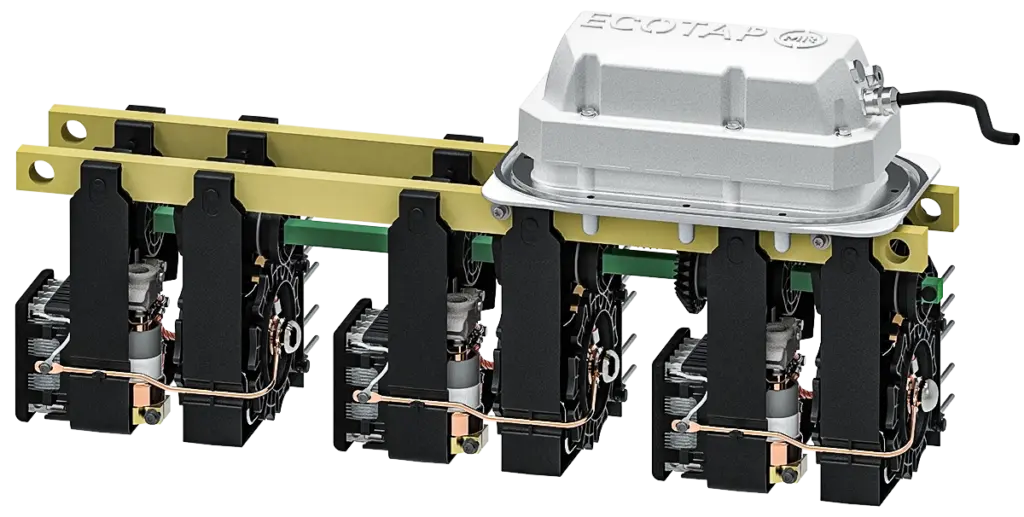
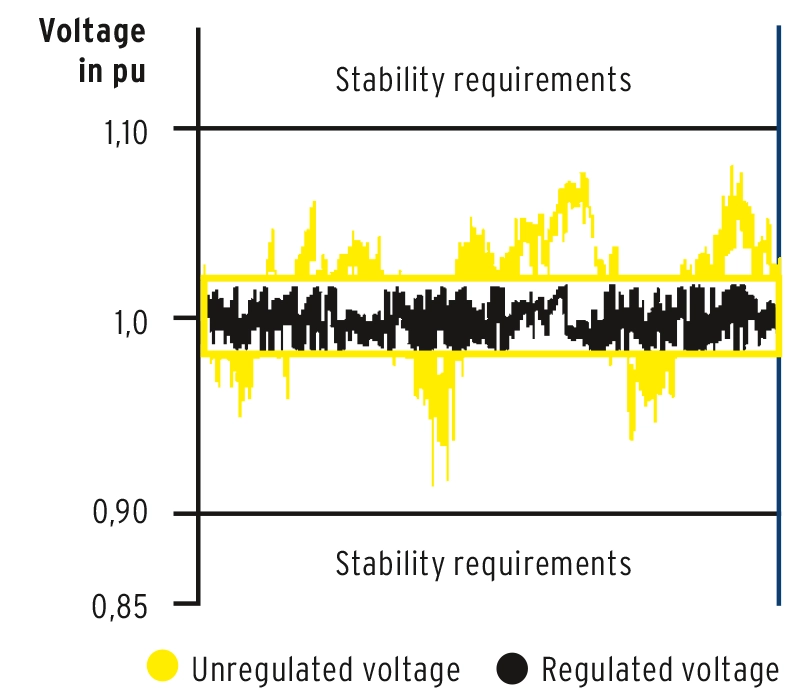
This is exactly where ECOTAP® VPD® comes in: a compact, regulated on-load tap-changer (OLTC) located directly in the transformer between the inverter and the medium-voltage grid or between the inverter and the power transformer. Its task is as simple as it is effective: the voltage on the low-voltage side is stabilized and the inverters can maintain their rated power even when the medium-voltage grid is “wiggling.” The inverter is effectively decoupled from the fluctuations on the grid side, and a more stable voltage prevails at the inverter level, which can be regulated within a range of plus/minus two percent. Since inverters are certified for at least plus/minus ten percent, the operating point can be adjusted dynamically.

“With a regulated inverter station transformer, we reduce shutdowns, minimize power losses, and ensure better utilization of the inverters.”
Waqas Hussain, Global Account Manager, Reinhausen
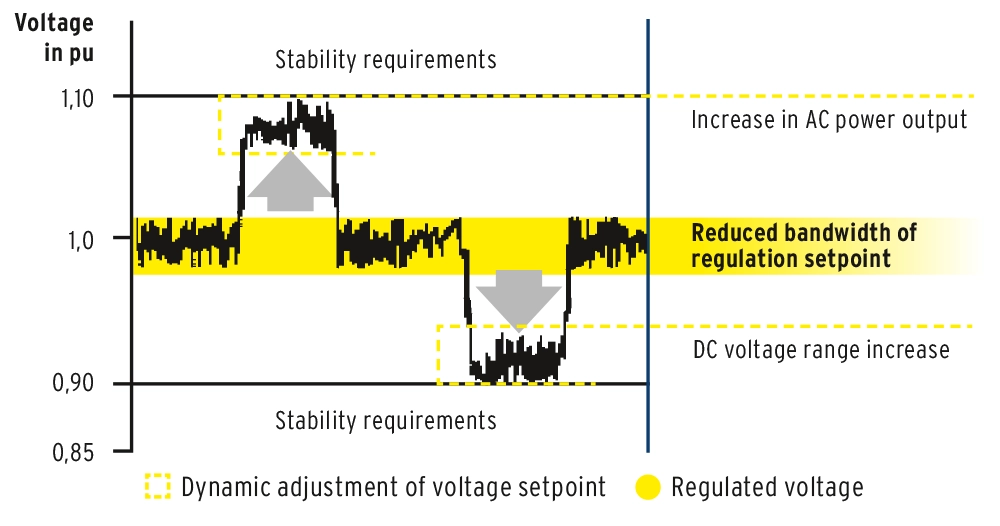
Hussain explains: “This allows us to increase the voltage supply to the inverter at peak times and increase the power throughput, thereby reducing clipping losses. In times of low irradiation, we can significantly expand the DC-MPP range, i.e. the range in which the inverter operates optimally.” The result is that virtually no undervoltage arises, which means that up to ten percent fewer inverters with associated cabling and transformers are needed to meet grid code requirements and provide the same active and reactive power from the inverters. On the other hand, there is no longer overvoltage, so the highest power is always achieved.
Study verifies benefits
Overall, this leads to higher energy yields, as determined by the Technical University of Braunschweig in a case study. With the help of the DigSILENT Power Factory, the effects of on-load tap switching on the annual yield of a 105 MVA plant in El Paso, Texas, were simulated. The study, based on a project design with a DC/AC ratio of 1.25, shows that this approach leads to significantly lower investment costs for inverters or cabling, for example.
At the same time, the additional yield is around 10 GWh, which corresponds to approximately +3.5 % of annual production. The payback period for the investment costs for the OLTC is less than two years–with a plant life of 25 to 30 years. An alternative design, which considered the use of higher-rated 4.6 MVA inverters (operating at 690 V) with an OLTC instead of 4.2 MVA central inverters (operating at 630 V) typically used in the region, showed that the same plant performance and yield could be achieved while using up to 8% fewer inverters.
The ECOTAP® VPD® offers a simple but effective solution to a problem that every PV plant faces: voltage fluctuations. The combination of higher yield, reduced investment costs, and stable grid quality makes it a tool that is likely to be used in more and more PV projects worldwide in the future.
All the important information at a glance
Grid Codes: grid-compliant integration of renewable energies
With the increasing share of renewable energies, compliance with grid codes is becoming increasingly important. These technical specifications ensure the stability and reliability of power grids even under extreme conditions. They set requirements for active and reactive power control, voltage and frequency bandwidths, grid quality, and behavior in the event of grid faults.
A key issue is the dimensioning of the inverters, especially with regard to voltage ranges, as well as active and reactive power capacity at the grid connection point. OLTCs in inverter station transformers can reduce the need for additional reactive power compensation; in power transformers, they are often required by grid codes to regulate voltage. Nevertheless, OLTCs alone are not sufficient to satisfy all power quality requirements.
Disturbances such as harmonics, flicker, resonances, or voltage fluctuations require project-specific solutions. MR offers a broad portfolio for this purpose—from static systems with capacitors for reactive power compensation and filtering, to dynamic solutions with power electronics such as active filters, SVCs, and STATCOMs which enable rapid responses to grid disturbances and thus ensure compliance with grid codes.
ECOTAP® VPD® — the principle
ECOTAP® VPD® can be thought of like an automatic transmission: whether going uphill or downhill, it ensures that the engine always runs in the optimum speed range. Applied to PV, this means that the inverters always operate at their best, regardless of how the grid voltage changes. This means more energy, less down-time, and a longer service life.
Benefits for operators
- Higher energy yield thanks to optimal inverter utilization.
- Less hardware required (inverters, cables, transformers) for the same output.
- Shorter amortization periods—particularly attractive for large and
- medium-sized projects.
- More power from the same components:
- At noon: Slightly increase voltage → Reduce clipping losses.
- Morning/evening: Slightly reduce voltage → Inverters start earlier and run longer.
- Throughout the year: Full reactive power provision in accordance with grid codes without oversizing the inverters
More efficient PV systems
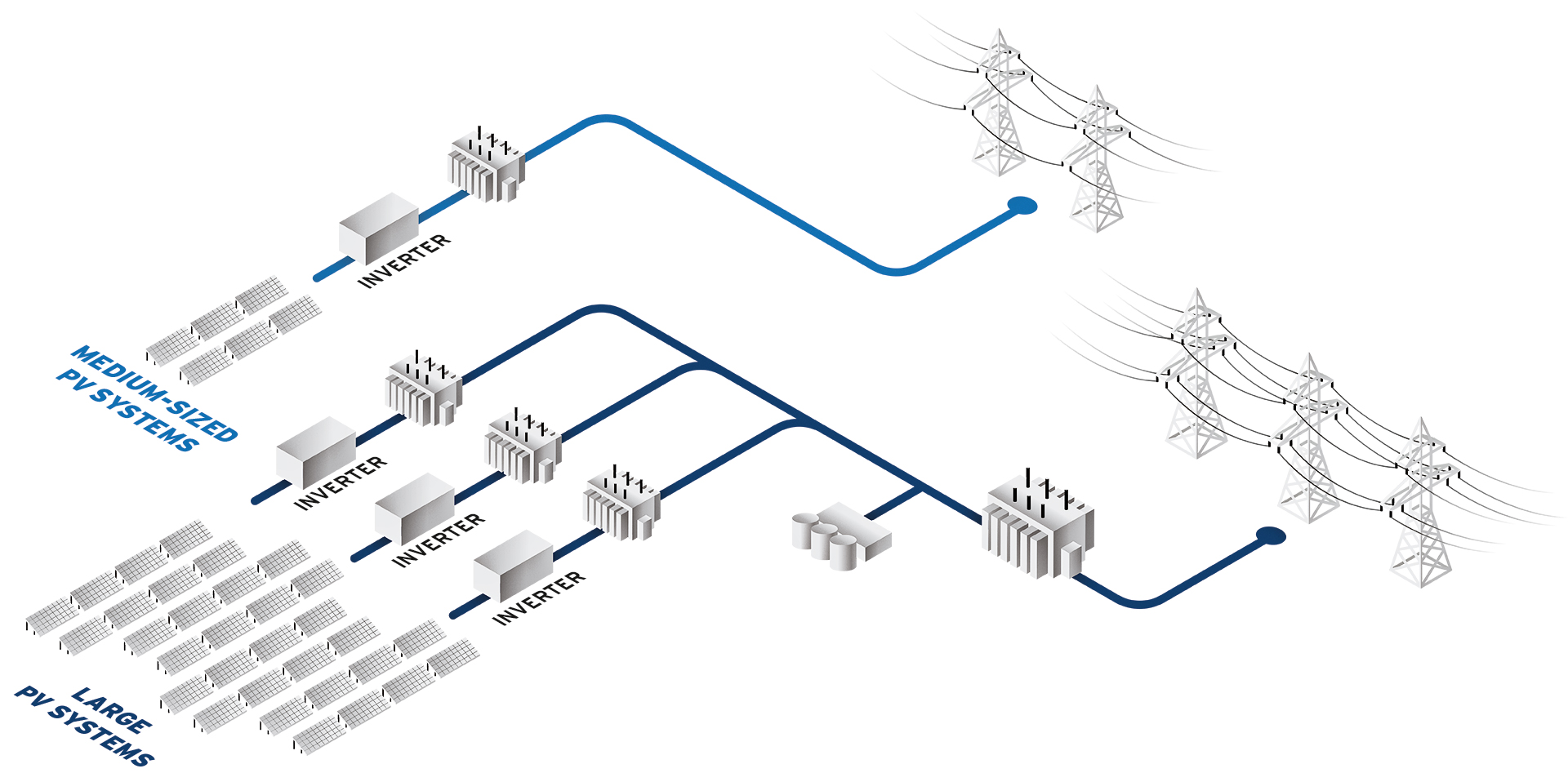
Regulated inverter and grid-connection transformers offer compelling advantages for medium-sized and large PV systems. Together with Power Quality Solutions products, Reinhausen ensures greater efficiency through better power quality.
Click on the -symbols for more information on the areas.

YOUR CONTACT
Do you have questions about our solutions for PV systems?
Waqas Hussain is here to help:
W.Hussain@ae.reinhausen.com