For 50 years, professionals from Reinhausen have been training service technicians, customers, service partners, and employees to ensure that MR products remain reliably in use for decades. What began with a training center in Regensburg is now more international and digital than ever.
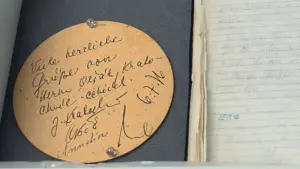
A yellowed beer coaster bears witness to the first customer training session – back in 1976 in Regensburg. On that July day, so the story goes, an Reinhausen employee shared important technical knowledge and skills. A customer then wrote a few lines of thanks. This memento can still be found today in a small display case with a glass lid at the Regensburg training center.
The name of this employee: Manfred Böhm. He was a service technician at the time and, on his own initiative some 50 years ago, organized a few OILTAP® C, D, and F type high-speed resistor-type tap-changers from production so that he and his colleagues could stay up to date on maintenance issues and learn to make the right decisions in the field. They used the breaks between customer visits for this purpose. Back then, they had only a corner in the assembly area at their disposal to tinker with the tap changers. Soon, customers also became interested in learning the technical details and how the tap changers worked.
Fifty years ago, a customer wrote a thank-you note on a beer coaster for their first training session at Reinhausen. The beginning of a success story.
And so the idea arose to set up a professional training center. On the one hand, to provide ongoing training for MR’s own service technicians to ensure a consistently high standard of maintenance and service worldwide. On the other hand, to give customers the opportunity to train their own service personnel so they can better understand the complex products and solutions and use them safely.
Exhibits spanning approximately 1,000 m2
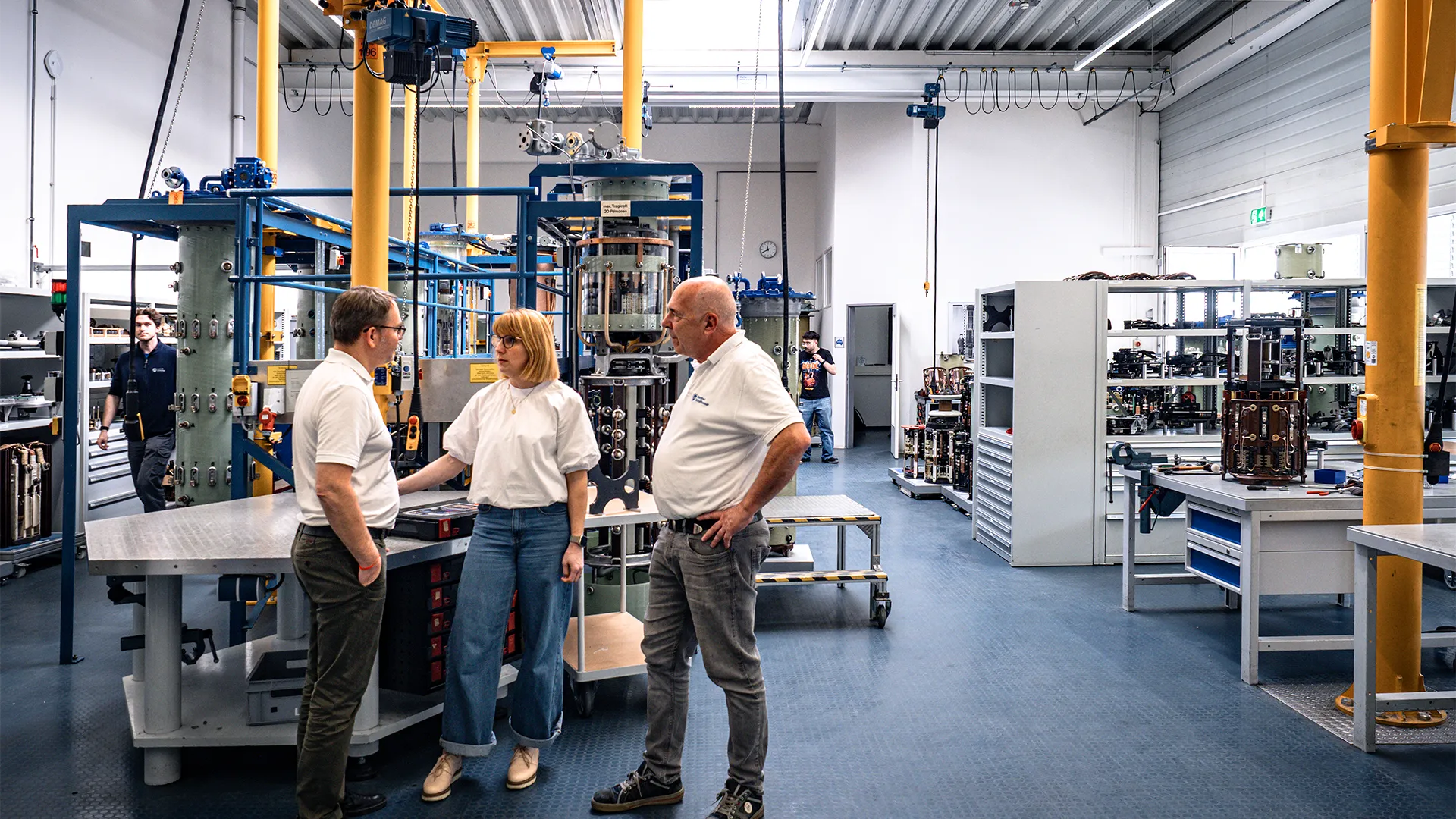
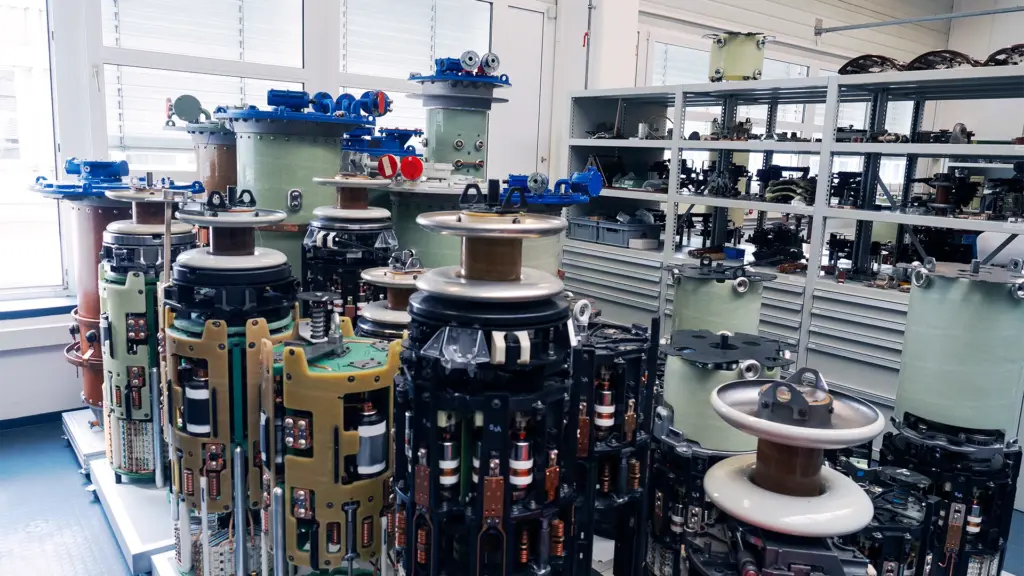
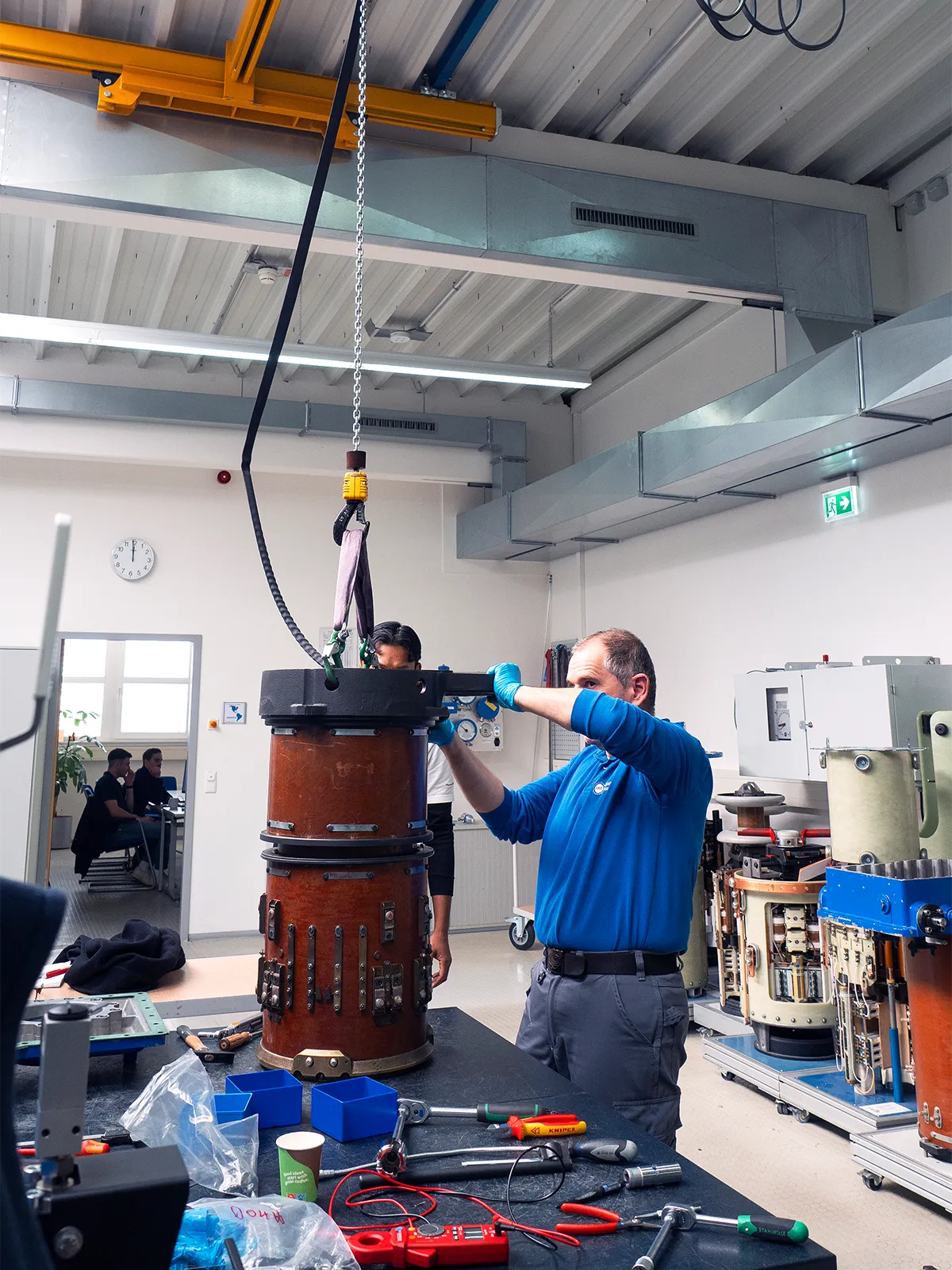
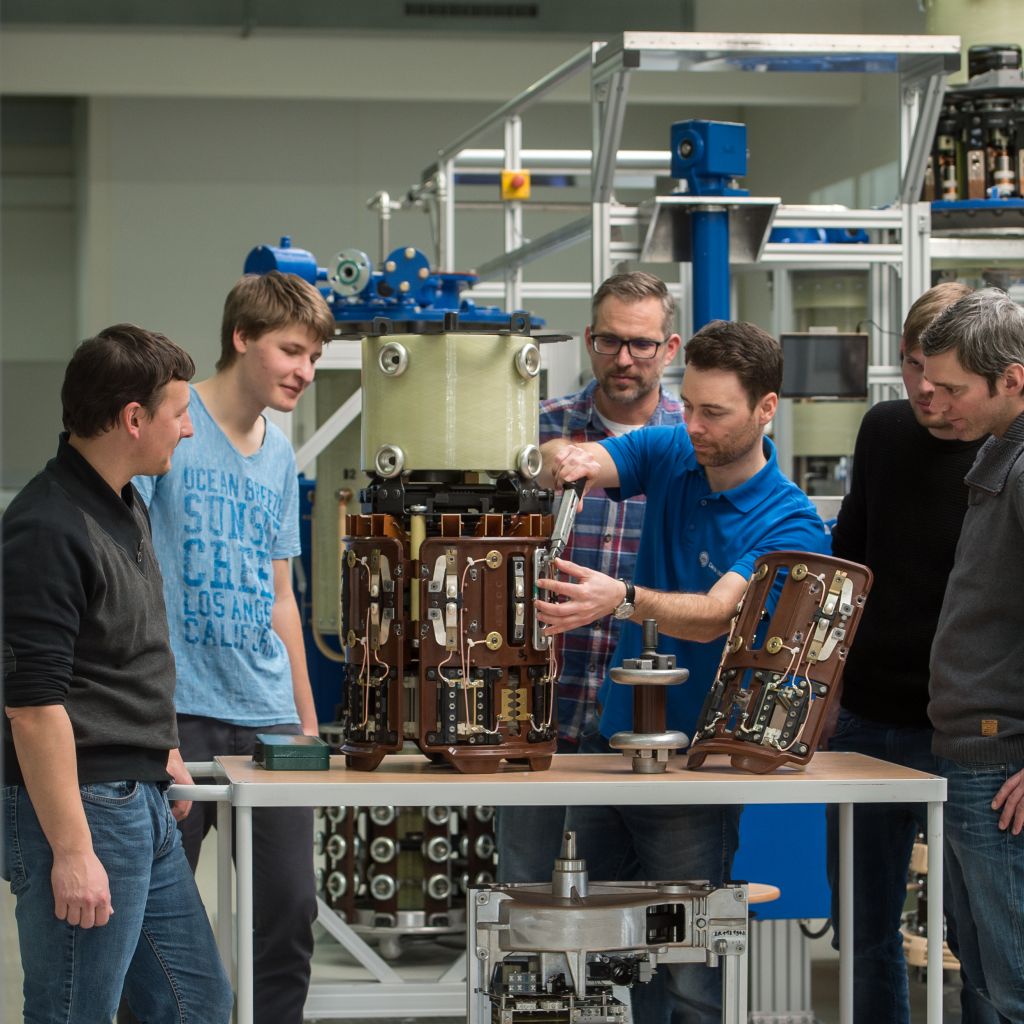
Today, at the production site in the Haslbach district of Regensburg, more than 300 exhibits are gathered across nearly 1,000 square meters to serve as training objects for hands-on training. In addition to all types of tap changers — most of which date from the last century – there are also motor drives, electronic products, and transformers.
More than 300 exhibits over two floors are available in Regensburg as practice objects for hands-on training.
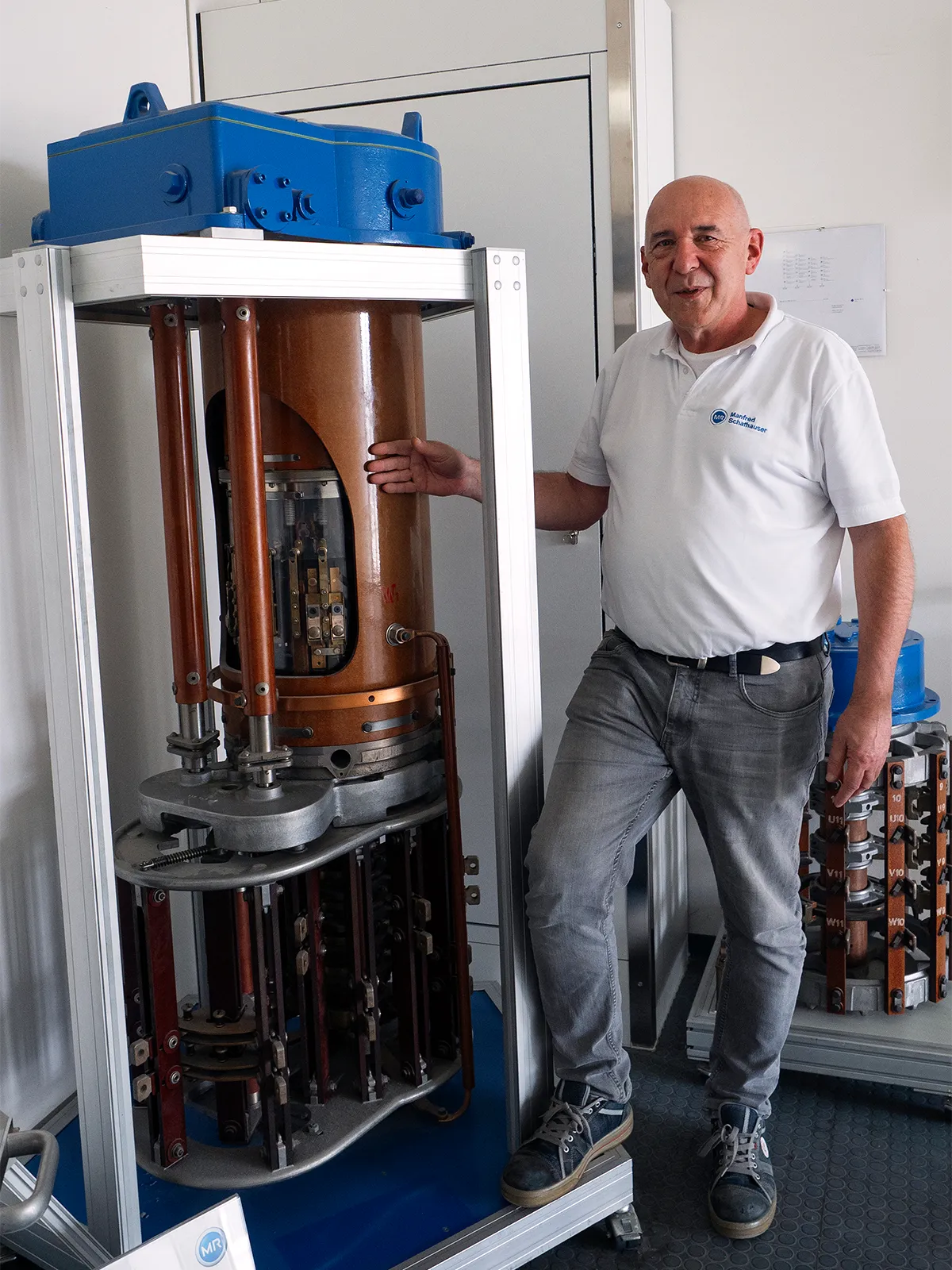
Manfred Schafhauser knows every tap changer. Here he stands next to an on-load tap-changer that’s about as old as he is.
A film studio for video learning content and a web studio for digital trainings are now part of the facility as well. Up to six groups of trainees can learn on site simultaneously at large workbenches and in various classrooms, and a wide range of courses for MR technicians, service partners, and customers are offered. The several-month-long training program for MR technicians, for example, begins with a two-week basic training course, followed by product-specific training sessions with a final exam and certificate.
All seven trainers at the facility have many years of professional experience in the field. Manfred Schafhauser is one of them. He completed his training as an industrial electrician at MR at the age of 16. Now 63, he smiles as he recalls: “Back then, I was told I’d probably have to change careers five times over the course of my life. I remember not being thrilled by that prospect at first, but that’s exactly how it turned out.”
“Only when I know exactly what I need to do myself can I teach it to others.”
Manfred Schafhauser, Trainer
After completing his training, he became a service technician and worked all over the world on behalf of Reinhausen for 20 years. As a result, Schafhauser is familiar with virtually every situation an MR service technician might encounter.
In 2007, he decided to pass on his knowledge to other service technicians. “Since then, I no longer travel to customers – they come to me,” says Schafhauser with satisfaction.He now works as part of a seve n‑person trainer team in day-today operations and on the further development of the training center. This also involves continuing his own education and delving into new products: “Only when I myself know exactly what I need to do can I teach it to others,” says Schafhauser.
Demand is enormous
Over the past 50 years, MR’s service team has grown worldwide from 22 to around 360. During the same time, a wide variety of products have been installed in transformers all over the world. This has led to high demand for training and continuing education for skilled workers. As a result, the German training center, for example, is already fully booked through the end of 2026.
The MR trainers are constantly coming up with new tasks to impart and test knowledge. Always on equal footing and collegial — which creates a special atmosphere in the training center.
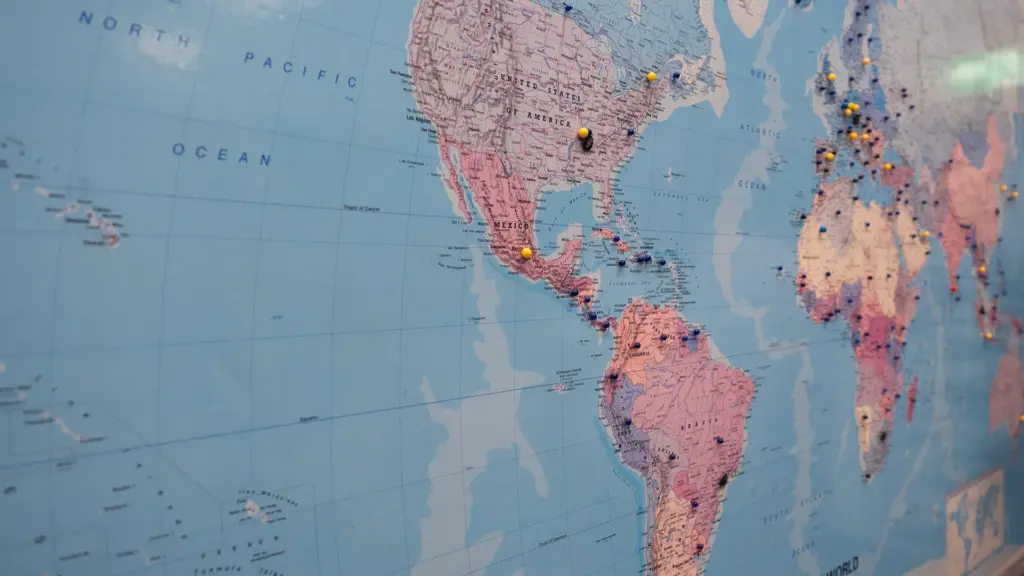
Trainees come from all over the world: A map hangs in the Regensburg training center, on which the technicians in training mark their countries of origin. Training according to MR standards is now conducted in training centers on five continents.
This is one of the reasons why Reinhausen decentralized the training center concept and rolled it out internationally. Now, knowledge can be shared in five additional certified and modern training centers around the world. In China, Brazil, the U.S., Malaysia, and South Africa, Reinhausen is now training specialists who are never far from customers in their respective countries. The digitization of learning content as well as new tools also help ensure that as many people as possible benefit from training.
Digital training center
That is exactly what Kerstin Faltermeier is responsible for. She is strategically in charge of digital training concepts and is working on a digital training center. To this end, she frequently attends trade fairs, networking events, and other gatherings to stay informed about digital solutions, new technologies, and strategies.
“For example, working with CAD models to digitally break down a tap changer into its individual components. Or the early attempts to use AI-powered training videos not only to translate into different languages, but to actually have the trainer speak the languages – with perfect lip sync,” says Faltermeier.
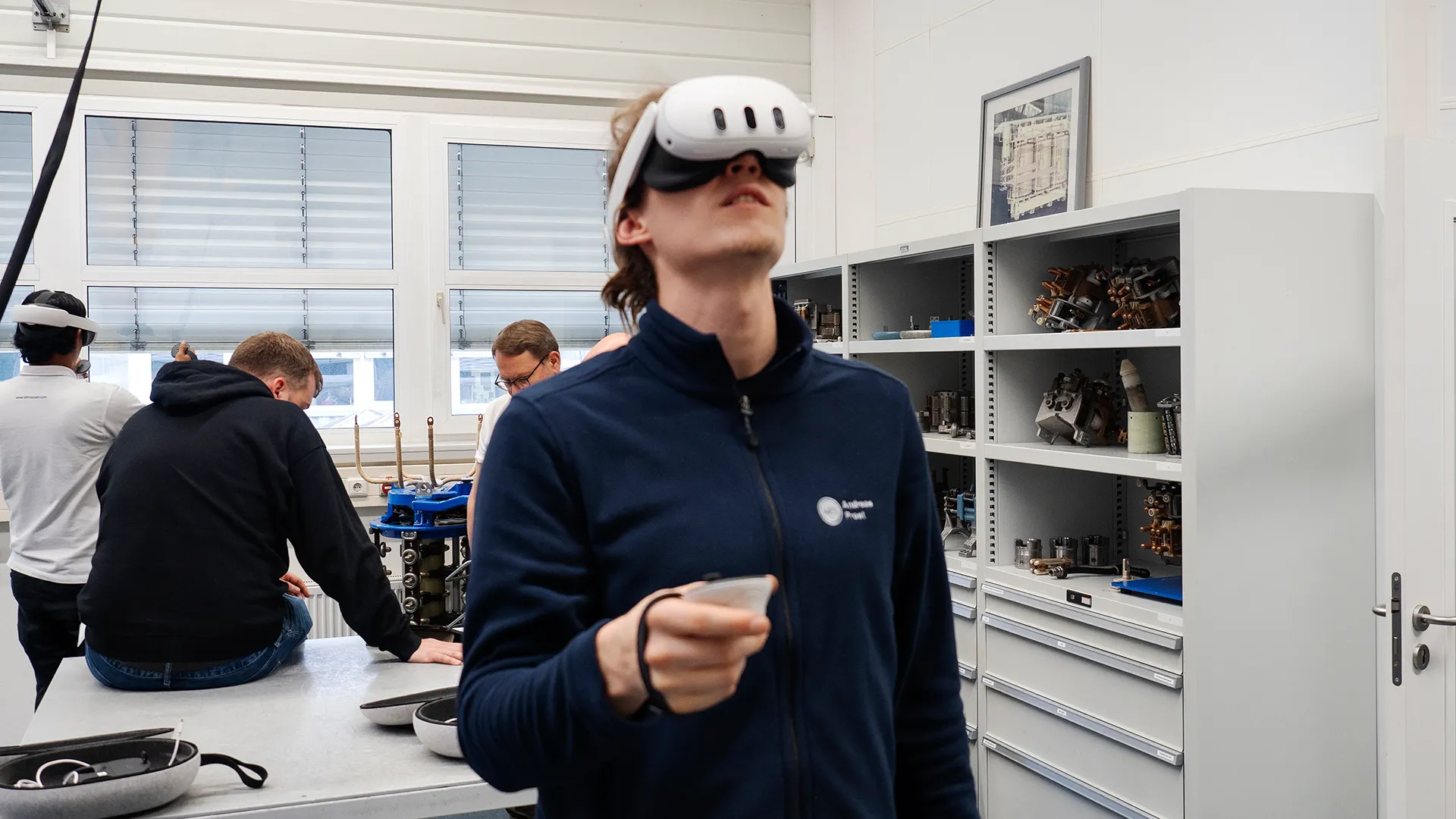
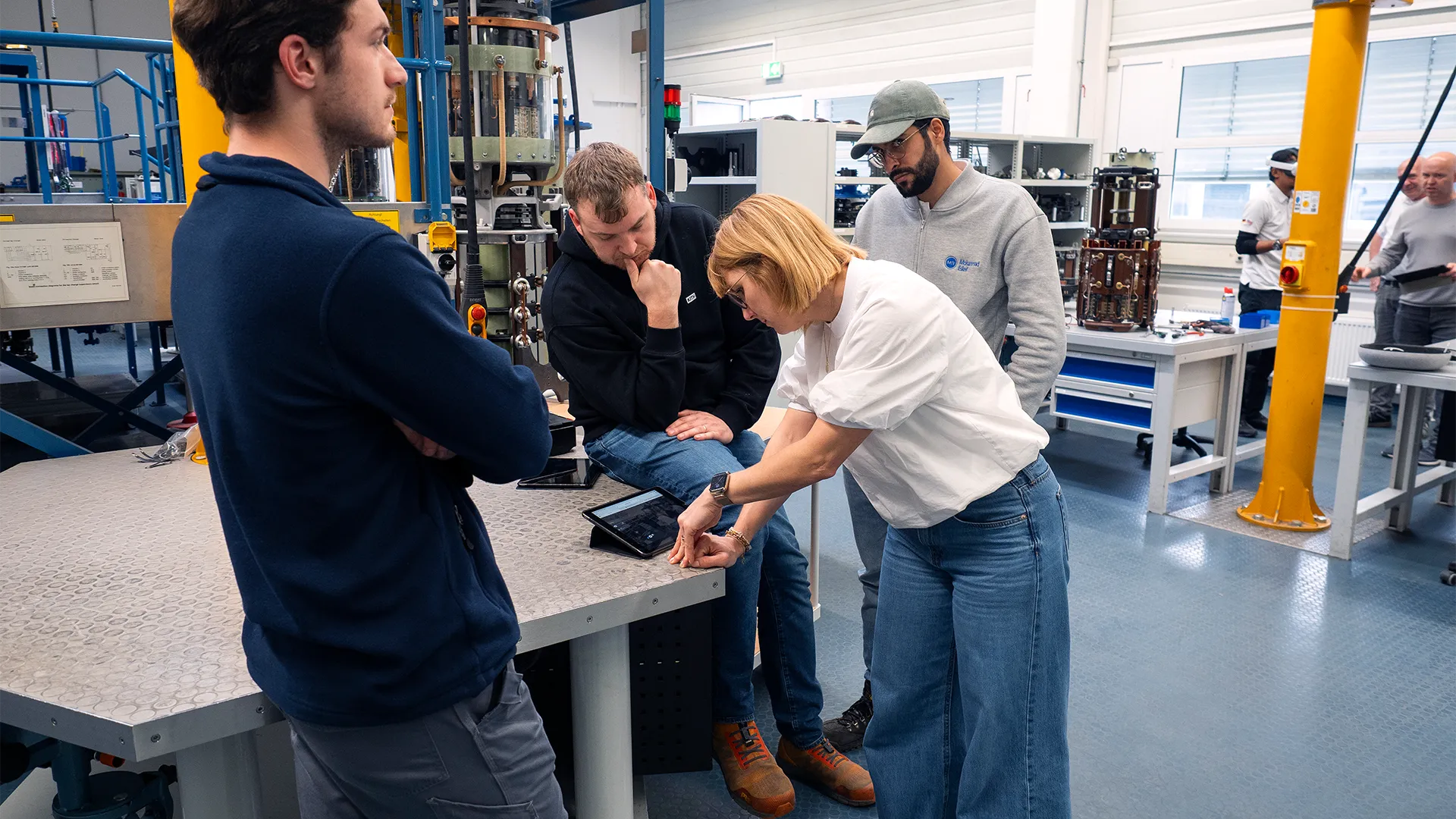
While one of the participants wears VR goggles and solves tasks, the others follow his gaze on the tablet screen.
The trainee may be in a different world, but he is in a situation he frequently encounters as a service technician: It must be ensured that the transformer is truly switched off and that no voltage is present.
If a new solution might be promising for Reinhausen’s training centers, she conducts further research, runs tests, and evaluates whether the solution offers added value.
The newest innovation – virtual reality (VR) training – was introduced in 2026 and is currently being used by a group of six. They are currently doing the two-week basic training during which they learn safety rules, among other things, and VR allows them to practice the rules hands-on. While one of the participants wears a headset and completes tasks, the others follow along on tablet screens. “In virtual training, tasks can be performed through hand movements,” explains Kerstin Faltermeier as she assists the learning group with technical questions about the program.
“There’s nothing our trainers haven’t seen or can’t do.”
Faltermeier developed and implemented this training content together with the trainers. “Compared to physical models, there is the clear advantage that errors and malfunctions can be simulated repeatedly at will, and we can work on facilities that we don’t have on-site, such as substations. Nevertheless, it remains important that models can be handled and physically disassembled.”
Closeness and trust matter
Thanks to digital training formats, learning is possible anytime and anywhere. The Reinhausen training platform offers e‑learning modules for selfstudy; AI-generated questions prepare participants for theoretical exams; and in training videos, trainers speak fluently in every conceivable language with the support of AI. “That makes a huge difference,” Manfred Schafhauser adds. “With complex content, it’s an advantage to convey it in the respective native language. Here on-site, we have our hands and feet to help us in case of misunderstandings. That’s missing in the digital world.”
Training content is created in the film studio, which learners can access anytime and from anywhere.
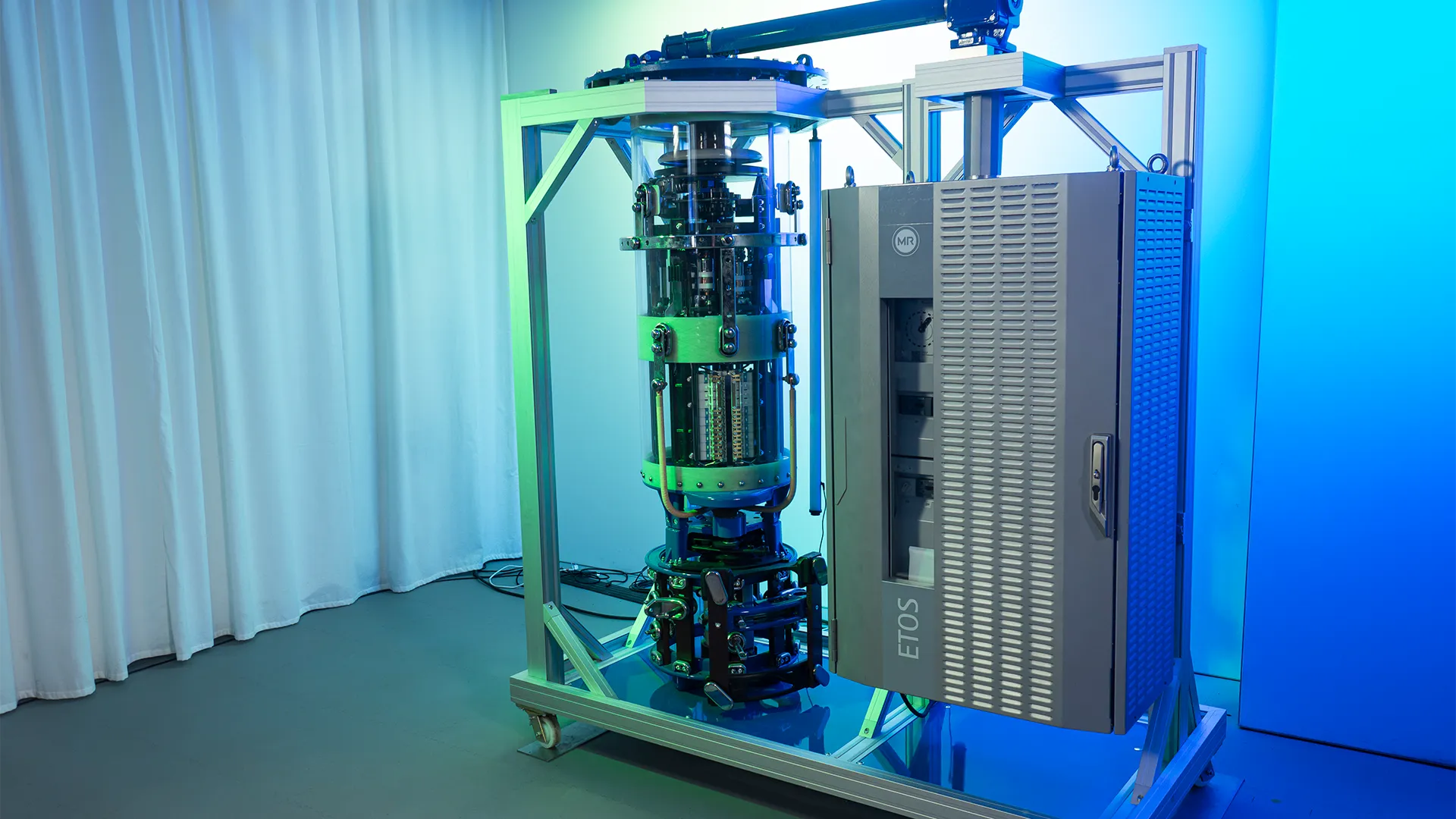
This example shows the ETOS® operating system.
In addition to professional training videos from the studio or workshop, the team also offers live digital training sessions. Kerstin Faltermeier is convinced that the future holds many possibilities: “If there are digital twins for every product in the metaverse, it will be even easier to bridge distances and stay connected in the exchange of knowledge.”
Nevertheless, the family-like atmosphere for which the Reinhausen training center is known will continue to play a significant role in the future – Faltermeier and Schafhauser are convinced of that. To this day, there are numerous guest books filled with entries and photos from training participants from all over the world. Guests leave their entries on a page of the book as a token of thanks and to be remembered. Because here, during the training sessions lasting several weeks, it’s not just work-related content that’s shared, but also a bit of culture and a good time.
Training by Reinhausen
Reinhausen has six training centers worldwide across five different continents: in Germany, China, Brazil, the U.S., Malaysia, and South Africa. The in-depth, hands-on training is specifically tailored to the needs of target groups: service technicians, service partners, customers, and employees.
The trainings cover various topics, including transformers, tap changers, sensor technology, ETOS®, voltage regulation, transformer accessories, and technical service.
A two-week basic training course is followed by product-specific training.
The certification of MR service technicians as Premium Service Providers (PSP) is internationally recognized and is granted following extensive training culminating in a final theoretical and practical exam. Service technicians must also demonstrate field experience and regular maintenance of the products, and renew their certification every 24 months.
Only certified PSP technicians are authorized to perform maintenance or service calls at Reinhausen customers’ sites.
In certain regions, certified partners provide service in accordance with MR standards for selected products and services. These Certified Service Partners (CSPs) must undergo regular, intensive training at the training center and pass theoretical and practical exams.
Nach einem zweiwöchigen Basistraining folgt das Training an den jeweiligen Produkten.
Die Zertifizierung der MR-Servicetechniker zum Premium Service Provider (PSP) ist international anerkannt und erfolgt nach einem umfangreichen Training mit einer abschließenden Theorie- und Praxisprüfung. Ebenso müssen die Servicetechniker Felderfahrungen und regelmäßige Wartungen an den Produkten nachweisen und das Zertifikat alle 24 Monate erneuern.
Nur zertifizierte PSP-Techniker dürfen bei den Kunden von Reinhausen Wartungen oder Einsätze durchführen.
In bestimmten Regionen führen zertifizierte Partner den Service nach MR-Standards für ausgewählte Produkte und Dienstleistungen aus. Die sogenannten Certified Service Partners (CSP) durchlaufen regelmäßige, intensive Schulungen im Trainingscenter und legen theoretische und praktische Prüfungen ab.