Dr. Manuel Sojer, Executive Director for the Core Business and, as of 1 August 2026, a member of the Executive Board, and Jürgen Ach, Executive Director of Automation & Digital Solutions, are two of the architects behind the products and services that enable Reinhausen customers to master the challenges of the energy transition. In this interview, they explain how they are shaping the roadmap toward the future together with customers.
The energy technology sector is going through exciting times, and 100 years after the invention of the high-speed resistor-type tap-changer, we are at a systemic turning point. How would you summarize the current challenges?
Dr. Manuel Sojer: The industry hasn’t been this exciting in the last 100 years, and we are in a situation similar to that of 1926. The grids must be expanded to ensure greater stability, but for the transition to an all-electric society to succeed, we need innovative solutions, the smart use of data, and close collaboration within the ecosystem – both in technology and in process logistics.
Jürgen Ach: At the same time, the existing electrical infrastructure is aging. In addition to the necessary grid expansion, the industry is undergoing a comprehensive renewal cycle of its technical infrastructure for the first time. Existing facilities must be gradually replaced where necessary or intelligently maintained and kept in use for as long as possible. At the same time, the industry is facing a profound generational shift.
How do you intend to support your customers in light of these dynamics?
Dr. Sojer: Essentially, there are two key points. First, compliance with grid codes, i.e. grid connection requirements. Whether you want to connect power generators such as PV parks or wind turbines, or large consumers such as data centers or electrolyzers to the grid, you must always meet the grid connection requirements. And these are becoming increasingly complex because the grids themselves are also becoming more complex. We support our customers in meeting these requirements, for example, with reactive power compensation, voltage stabilization, and filters.
Ach: The second point concerns the operation of our customers’ equipment which must be managed efficiently and safely throughout its entire lifecycle. Against the backdrop of rapidly expanding yet aging infrastructure and a shrinking pool of experience, operational decisions must therefore be increasingly systematized and grounded on a robust foundation. This is precisely where we come in: We provide transparency regarding the condition of equipment and make relevant information for continued operation, maintenance, or replacement available in a structured manner.
“For the first time, the industry is undergoing a comprehensive renewal cycle of its technical infrastructure.”
Jürgen Ach
Let’s stick with primary technology for now. Can we expect any real innovations in this area in the future?
Dr. Sojer: Absolutely. Transformers and tap changers will continue to play a central role in the energy supply in the future. They are the best available technology for solving problems of static voltage maintenance. As energy systems are transformed, problems are constantly increasing, and at the same time, this creates opportunities for innovation.
Let me give you an example: With the energy transition and decentralized feed-in, new voltage problems have arisen in distribution networks. We are solving these today with our tap changer for local distribution transformers, the ECOTAP® VPD®. And of course, the new VACUTAP® VI also comes into play here, enabling the creation of more sustainable transformers with a smaller footprint. In addition, the VACUTAP® VI is easier for transformer manufacturers to install. We therefore make transformers smarter to control and enable broader fields of application, such as for data centers, wind farms, or electrolyzers.
By always thinking one step ahead regarding our tap changers and their applications, we help to efficiently implement the energy transition. When it comes to grid connection conditions in modern grids, our power quality solutions also come into play. In many places, the requirements for reactive power or harmonics cannot be met without power electronics solutions. Thirdly, innovations arise from the combination of tap changers and power electronics systems. Here, progress lies in the interaction of individual components within a system, which can, for example, significantly increase the yield of a PV park.
This means you’re dealing with an increasing number of players in the energy market. How is Reinhausen prepared for this?
Dr. Sojer: Innovation can only arise through dialogue with customers. Many of our innovations have emerged from close collaboration with grid operators and transformer manufacturers. Today, this dialogue is more important than ever, because the energy sector has become significantly more complex. From equipment manufacturers and grid operators to project developers, plant operators, consumers, and investors, we must maintain a dialogue with all stakeholders. After all, our technology enables data centers to operate with fail-safe reliability and makes electrolyzers or wind farms more efficient – and thus more profitable.
“On-load tap-changers will continue to play a central role in energy supply in the future.”
Dr. Manuel Sojer
Mr. Ach, what is the situation in the area of asset management? Where do your customers feel the most pressure in that regard?
Ach: The greatest pressure in asset management currently stems from the question of how operators are dealing with growing uncertainty. Many of our customers are facing concrete questions such as: Which assets are critical? Where do risks arise? Which facilities can I continue to operate, and where do I need to invest? Especially with aging fleets and limited resources, prioritization becomes a central challenge. The real pain point here is less the individual asset and more the lack of an overview of the fleet and its condition. This is precisely where a reliable, transparent basis for decision making is often missing.
How do you help your customers achieve the necessary transparency regarding the condition of their systems?
Ach: The first step is integrating the transformer into a digital system environment. With our combination of mechanical accessories, smart sensors, field devices, and secondary technology, we integrate the equipment into a networked system. ETOS®, our Embedded Transformer Operating System, acts as a central system directly on the transformer. It collects condition, operational, and environmental data, consolidates it, and makes it available and analyzable locally. This makes a complex piece of equipment systematically accessible: data is not only collected but also translated into an operational context — serving as the basis for informed operational decisions.
And once I have this transparency, how can I use it to make better decisions in asset management?
Ach: Building on this, we evaluate the existing fleet together with our customers. As part of a structured assessment, we analyze the current condition, risks, and areas for action. We then support our customers in systematically developing their asset management further, from prioritizing specific measures through questions of continued operation or replacement to medium- and long-term budget and investment planning. Depending on the need, this takes the form of personal consulting, targeted project support, or the step-by-step development of an end-to- end process, for example based on our asset performance management solution TESSA®.
In your view, what is the key difference in approach if one wants to implement asset management effectively today?
Ach: Many asset performance management approaches today are developed from a software or IT perspective. Our approach is different: We draw on our technical and operational experience with transformers and substations. This enables us to think about asset management vertically – from mechanical components and sensors through field devices and algorithms to control and automation functions, as well as support for the asset management process. At the same time, this approach is deliberately modular and open ended. Systems can be integrated without proprietary limitations and expanded step by step. In-depth domain knowledge is crucial here: it is the foundation for ensuring that digital solutions are actually usable and effective in operation.
How does this approach translate into tangible benefits for your customers in practice?
Ach: On request, we equip every tap changer with ETOS® as standard. This turns transformers into communication-capable, analyzable assets of modern energy infrastructures. ETOS® functions as an intelligent edge system that aggregates and pre-processes data, making it usable for asset management and control systems. Thanks to its standardized interfaces and modular architecture, customers can get started gradually and further develop their systems in line with their requirements. On this basis, the information gathered can be integrated into higher-level asset management processes – from the evaluation of individual assets to the systematic control of entire fleets. In addition to the technology, we also support our customers with analysis, project implementation, and the establishment of corresponding processes. This creates a comprehensive approach – from intelligent assets to well-founded decision support in asset management.
Where does the future potential for innovation lie here?
Dr. Sojer: Most market participants have an enormous wealth of data at their disposal. Power transformers, for example, have been in operation for many decades. Over this time, operators have accumulated vast amounts of data on paper or in Excel spreadsheets. We need to find ways to turn this information into actionable decisions – ideally starting tomorrow – and to process it for applications and improved processes. Data and smart algorithms are the key to this.
Ach: In the field of sensor technology, we see a high level of technological maturity. New sensors and detailed improvements are constantly being added, making important contributions. Today, however, the central potential for innovation lies less in individual sensor components than in the intelligent integration of functions and data across the board. Crucial to this are robust algorithms based on solid, consistent data, as well as the development of simplified, semi-automated processes.
The goal is always to make the increasing system complexity manageable for our customers – not to increase it further. This requires a distributed system of modular units in the field. Together, these provide a consistent overall picture and, at the same time, concrete, status-related information on each individual transformer. Standardized, easy-to-use interfaces are necessary here that work just as well in the control center as they do for service personnel in the field, and make knowledge available across the entire organization – and that is precisely what drives sustainable innovation.
“With our products and solutions, we aim to be pioneers in sustainable energy supply.”
Jürgen Ach & Dr. Manuel Sojer

Where do you see Reinhausen in 10 years?
Dr. Sojer: We will then be in the final stages of the journey toward climate neutrality. Experience shows that this phase is the most challenging, as technical, regulatory, and operational requirements increasingly overlap. In this environment, we clearly see Reinhausen playing a dual role. We see ourselves as a manufacturer of innovative, highly reliable actuators – still tap changers, but also other key components – that make a concrete contribution to mastering the physical challenges of this phase.
Ach: On the other hand, we see ourselves as an integrated partner that supports its customers in their processes beyond just products – with systems, data-based functions, and targeted services that help reduce complexity and enable confident decisions. The more interconnected, digital, and data driven energy systems become, the less important individual products become – and the more important the interplay of technology, data, and processes. We see Reinhausen positioned within this interplay even ten years from now.
And when we look back in 100 years, what contribution should Reinhausen have made to the electrification of the world?
Dr. Sojer: 100 years ago, Dr. Jansen and the Scheubeck brothers made it possible for power grids to be built in the first place as we know them today. We want to carry this legacy forward into the all alectric society by using our products and solutions to pioneer a sustainable energy supply that is characterized by both high supply reliability and cost-effectiveness.
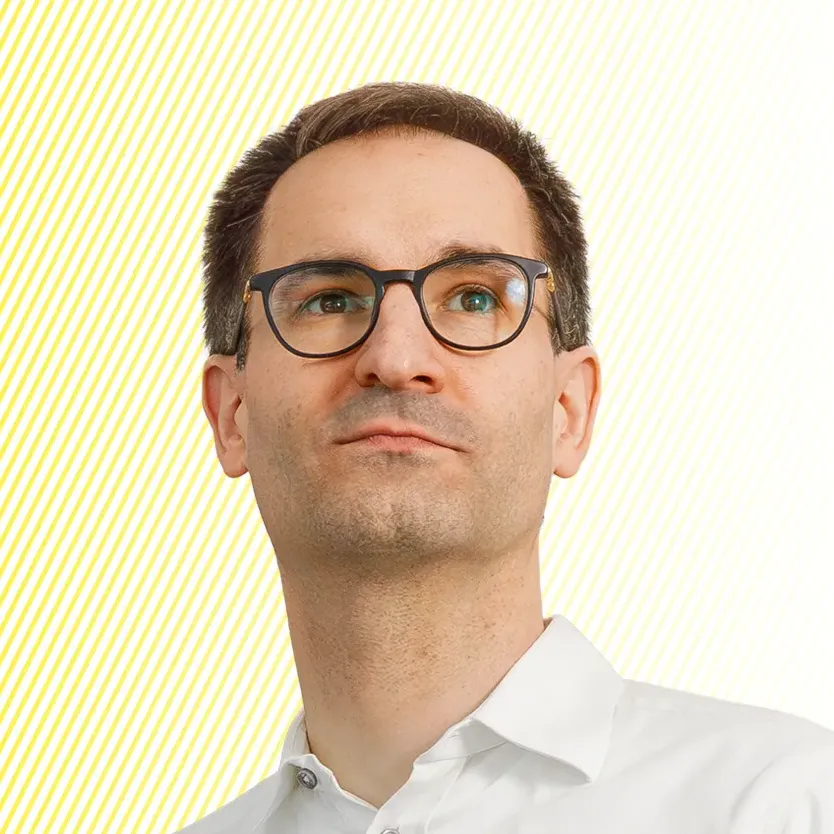
Dr. Manuel Sojer studied in Germany and the U.S. and subsequently earned his Ph.D. at the Technical University of Munich at the intersection of computer science and economics. He then worked for an American strategy consulting firm. In 2011, he joined Reinhausen, where he held various sales and technical roles. Today, he leads Reinhausen’s core business and will become a member of the Executive Board in August 2026.
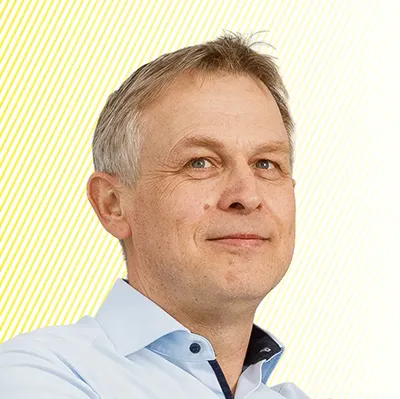
Jürgen Ach has been with Reinhausen for over 30 years. A state-certified electrical engineer with a degree in mechatronics, robotics, and automation engineering, he began his career in Regensburg in 1995. Since then, he has held various positions and has played a key role in advancing Reinhausen’s digitalization solutions. Today, as Director of Automation, he heads the Automation Technology division.