Harmonics, voltage dips, phase shifts, flicker, transient overvoltages: what sounds technical erodes asset owners’ yields, shortens the service life of their equipment, and puts business plans at risk. Reinhausen supports plant operators and commissioning engineers in safely connecting plants to the grid and operating them safely and stably over the long term. A look at international projects in practice.
For planners and operators, these power quality phenomena create a twofold task: every installation must comply with the grid connection requirements of the respective network operator – requirements that are tightening as more fluctuating generation, distributed storage, and non-linear loads come onto the grid. But the connection assessment is only the first step. The real test follows in operation: 25 years and more, under continuously changing conditions.
Grid connection
Compliance with grid connection requirements is as varied as the codes themselves. In Germany, VDE-AR‑N 4120 demands precise voltage and reactive power behavior for high-voltage installations; in the United States, IEEE 2800 and NERC standards set the benchmark for integrating renewable generation; Saudi Arabia follows SEC requirements. The principles are similar, but the details differ significantly, and anyone planning across borders has to understand the fine distinctions. Grid connection requirements define target values – but voltage and current on the grid don’t follow them automatically. Components such as on-load tap-changers and voltage regulators therefore play a key role: they adjust the transformer’s transmission ratio under load and keep voltage continuously within the permissible range, even as generation, load, or grid topology change. This is how compliance at the connection point becomes lasting grid compatibility.
In operation
A plant earns money not when it goes onto the grid, but when it stays there reliably and without interruption. With ETOS®, the open operating system for intelligent power transformers, Reinhausen captures operational and condition data directly at the asset – from the tap changer, winding, oil, bushings, or cooling system, for example.
These data feed into TESSA® APM 2.0, our asset performance management software, which generates assessments and actionable recommendations. It evaluates individual transformers along with other substation equipment and enables fleet monitoring across an operator’s entire asset base. Continuous measurement thus becomes a robust basis for decisions on operation, maintenance, and investment across the full lifecycle – instead of just an ever-growing volume of data.
Why systems thinking matters
Reinhausen’s role therefore begins long before any component is ordered. Our application managers join developers, asset owners, EPCs, and grid planners during the concept and feasibility phase, when the project still exists on paper. We contribute measurements, grid studies, and dynamic simulations, examine load scenarios on the simulation model, and provide concrete recommendations for component design. The earlier the consultation begins, the greater the leverage for an integrated solution. This delivers measurable savings: in capital expenditure, in design margins, and in avoided rework. If the consultation comes too late, only the choice of individual components remains.
“Optimizing the connection on the lowest CAPEX alone risks higher operational costsover the asset’s lifetime. We think CAPEX and OPEX together, from day one.”
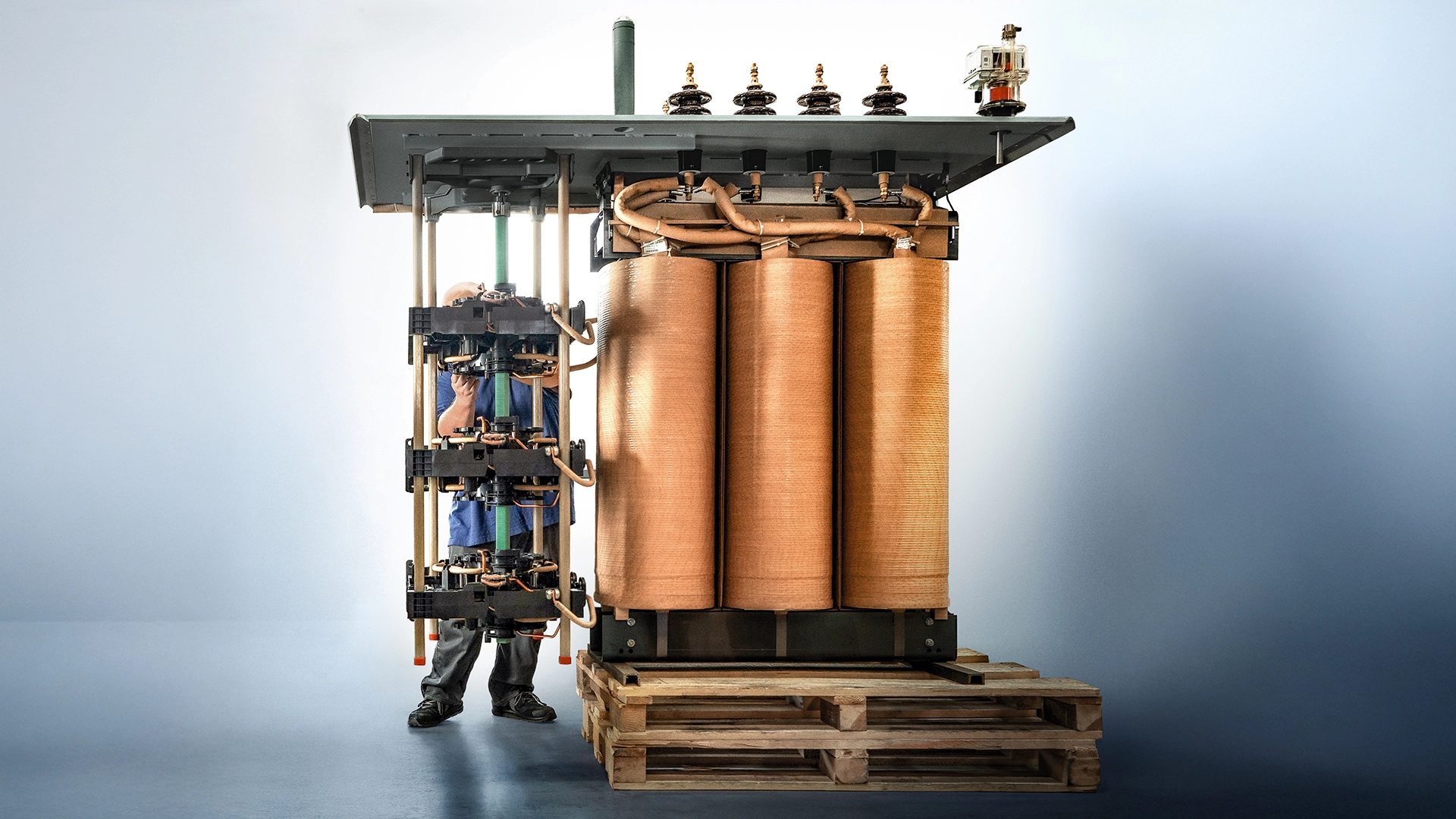
This is precisely where product thinking falls short: a single on-load tapchanger, a single filter, a single monitoring system cannot solve a plant-level challenge on its own. Only the interaction of on-load tap-changers for voltage regulation, power quality solutions to manage harmonics and reactive power, transformer design, and diagnostics creates a system that performs under real-world conditions. That is what is needed today: integrated, application-specific support instead of isolated components.
Systems of this complexity also need a reachable, reliable point of contact in operation. Reinhausen’s global 24/7 service installs, monitors, maintains, and repairs transformers, tap changers, sensors, and other substation equipment worldwide – across all manufacturers. This support, including training and consulting, extends over the full lifetime of the installations and the components critical to their operation. When a transformer fails in a wind park and replacement comes with a two-year lead time, that is not a convenience feature – it is a safeguard for the business plan.
Below, our global account managers show, from their projects with planners, developers, and operators around the world, how this works in practice.
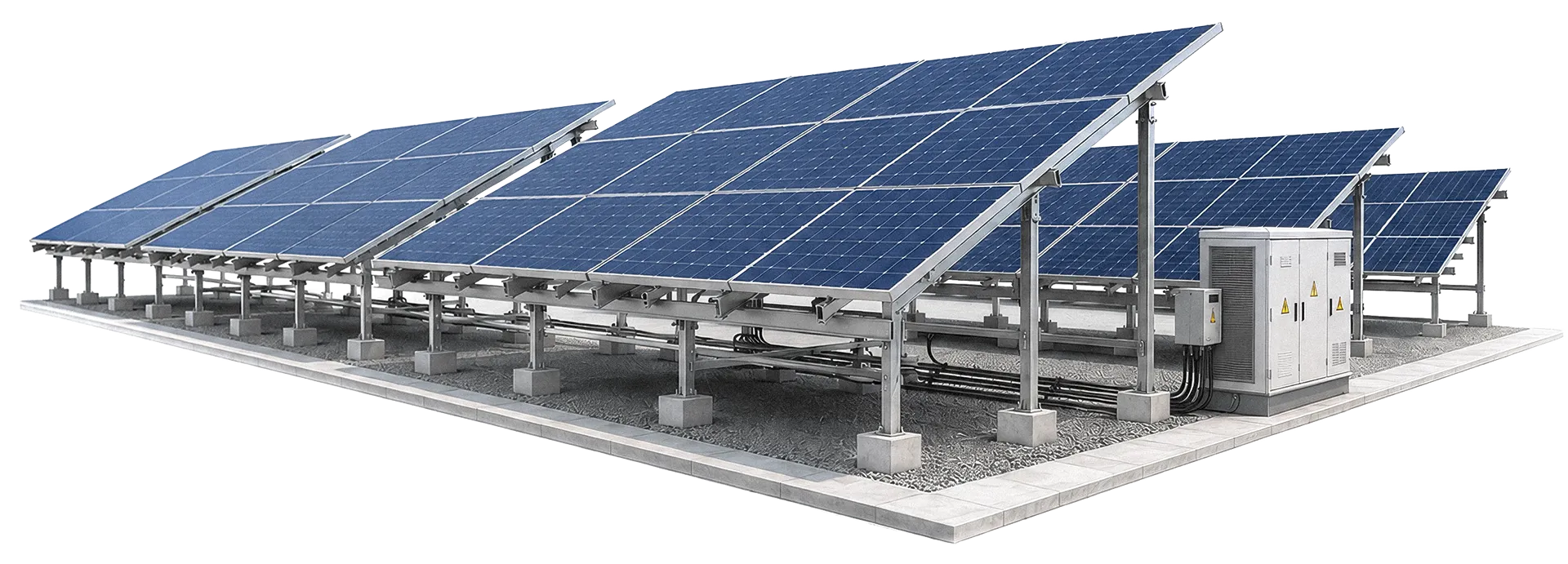
Weak grids, long connection lines and, with them the risk of grid-side curtailment, inverter derating or commissioning rework – this is project reality for many EPCs and operators. The economics of a solar park therefore depend on a system design that goes well beyond mere grid code compliance.
“Grid code compliance is the minimum requirement, not the goal. That’s where our work really begins.”
We optimize for higher yield: An on-load tap-changer in the transformer at the inverter – still not yet standard today – keeps the voltage stable at this level, even under critical grid conditions. This delivers a measurable increase in PV yield.
We optimize for lower cost: The same system design reduces the need for oversized inverter capacity or compensation equipment to provide reactive power. On-load tap-changers for power transformers, active and passive harmonic filters, and reactive power compensation can cover the rest of grid code requirements. Whatever is needed beyond that, we develop project by project on the simulation model – before construction starts.
We optimize for improved lifetime operation: Monitoring of transformers and other substation components, combined with fleet management, turns condition data into actionable decisions for operation and maintenance.
A lots is monitored in a wind farm. Just not the critical parts.
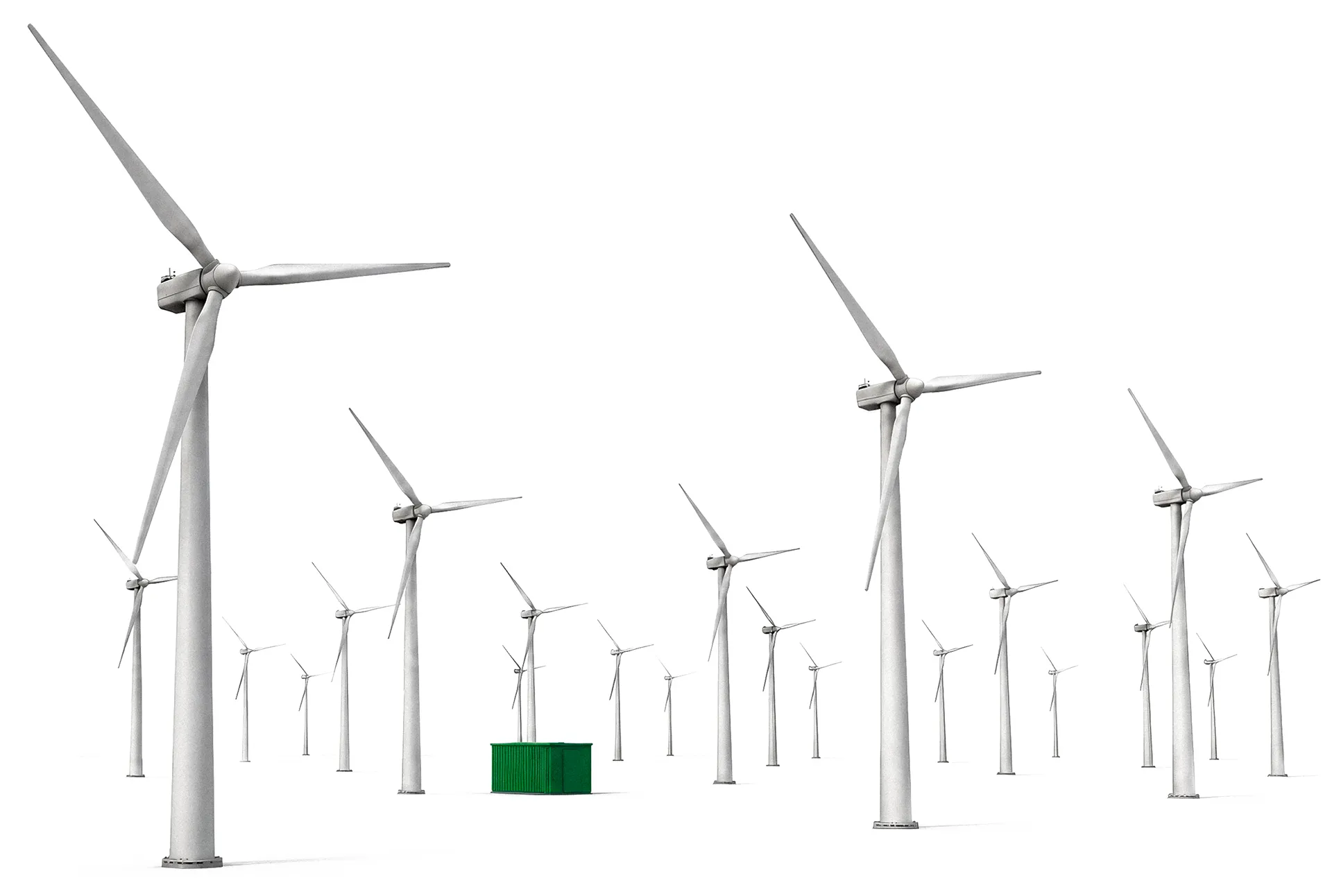
If a transformer fails in a wind farm, the lead time for a replacement is about two years. That’s no longer a glitch – it’s a disaster. Yet this very component operates blindly in most wind farms, while every rotor, every bearing, and every power spike is monitored in real time.
Monitoring for transformers and cables that can be integrated into existing platforms closes this gap. We provide control technology for power transformers and building on that, a broad portfolio of controlled shunt reactors, power-quality solutions with active and passive filters, and asset management solutions. But it is the right selection and combination that determines cost-effectiveness. There are levers for this that you need to know about.
“Those who apply the right levers early on build a better plant – with a lower investment.”
Marco Staiti, Global Account Manager Wind
Two examples: A controlled shunt reactor reduces losses compared to conventional reactors (multiple switchable reactors). In a design with fast-switching power electronics, it can even be a more cost-effective alternative to STATCOM. The key is the integration of these solutions: Individual components come together to form a well-designed system solution – tailored to the grid point, the project, and the operator.
Competitive hydrogen production starts with a stable power system.
In gigawatt-scale hydrogen projects, success is no longer defined by CAPEX alone. It is determined by how reliably and efficiently the overall system performs over decades. Electrolysis is not a static load – it is dynamic and highly sensitive to power quality. When connected to grids dominated by wind and solar, voltage deviations, harmonics, and fast fluctuations directly impact efficiency and accelerate component degradation over time.
“The integration of the electrolyzer, grid connection, and power quality is not a solution you buy as a single product – it is a system engineering challenge that defines performance and lifetime.”
This directly affects stack lifetime, maintenance cycles, and ultimately the economics of hydrogen production – which fundamentally changes how projects must be designed.
The traditional separation between process engineering and electrical system design no longer works. Electrolyzers, grid connection, and power quality must be considered as one integrated system from the early concept stage. The most resilient projects emerge where solutions are developed together, not merely based on predefined specifications.
Making energy available is not enough. It must flow in a stable, reliable, and precisely controlled manner.
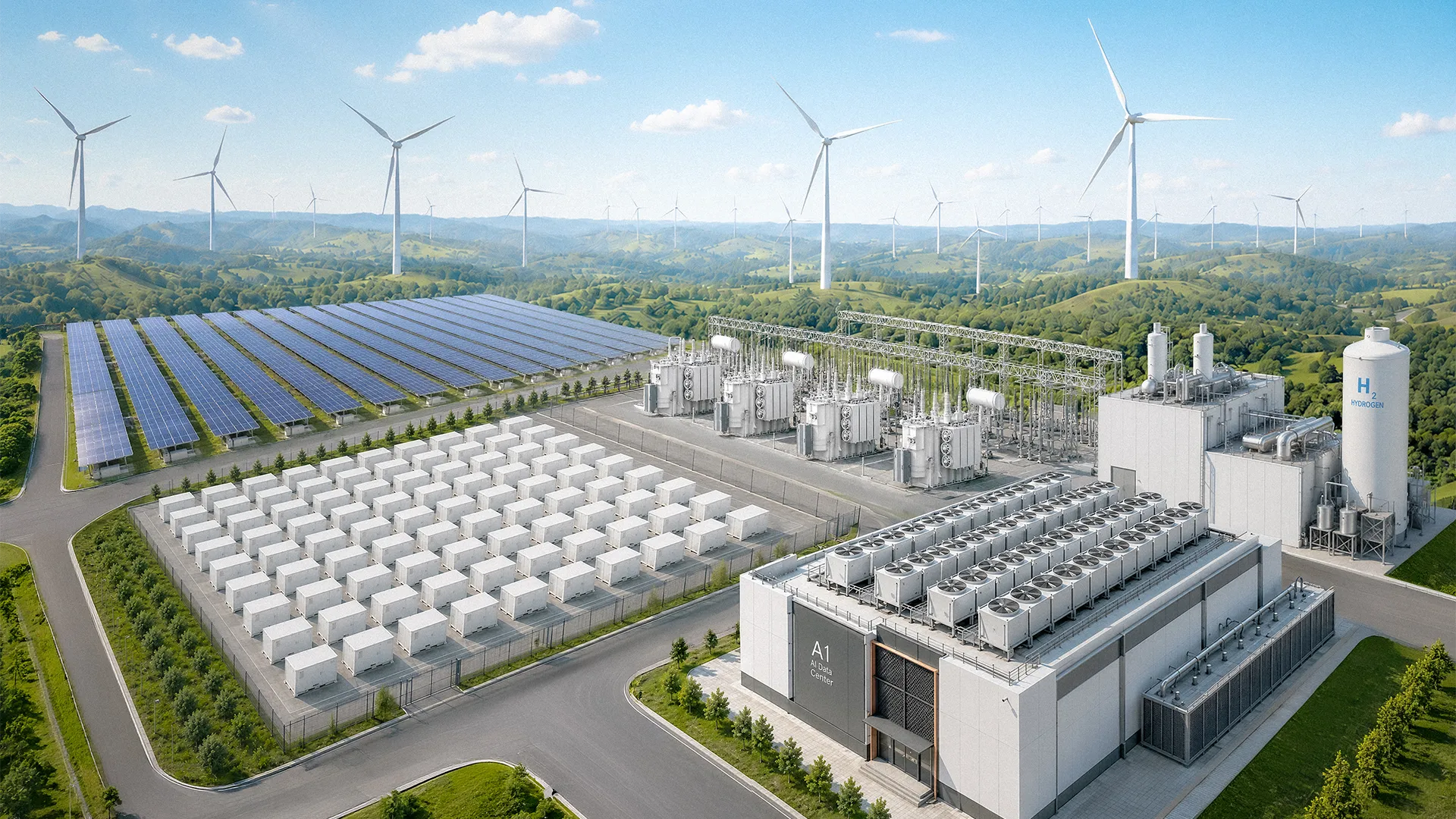
Whether it’s a traditional data center connected to the public grid or a hyperscale campus in the U.S. – with an area the size of Manhattan and energy consumption ten times higher than comparable German facilities – the grid connection isn’t the biggest challenge. The real complexity arises during ongoing operation. The more energy sources a data center combines for self-supply – gas, solar, storage, backup, and the public grid – the more demanding it becomes not only to distribute the energy but also to control it across all load conditions, with a complete overview. Added to this is the fact that frequency converters, server loads, and inverters place a strain on power quality from within.
“We must first understand where the data center’s challenges lie. In the end, the solution is not a single component, but a system that holds everything together.”
Markus Stank, Global Account Manager Data Center
For decades, Reinhausen has been the global leader in regulation technology for power transformers. The tap changer and associated sensor technology provide the foundation for precisely regulating voltage, reliably monitoring the entire system, and detecting changes early on. Active and passive filters maintain stable power quality where nonlinear loads distort it. Those who make the right decisions early on build a data center that remains reliable under any load – for decades.
Without storage, the grid can no longer handle the growing loads.
In the north, battery storage is linked to wind power; in the south, to PV; and increasngly to industrial customers with their own load profiles. Stand-alone systems are the exception with BESS. This is precisely what makes every project and every storage system different – and these differences have a direct impact on operations. It happens time and again that an operator calls us and asks: What exactly is inside the transformer I just bought? Then we take a look and sometimes exactly what they need for their operation is missing – monitoring that fits into their platform; a control system that smoothly manages the split-second switch between charging and discharging; and filters that prevent the system from causing problems for the neighbors.
“A system has to pay off – and it only does that if it runs for decades. With a partner who remains available for just as long.”
Anton Janker, Global Account Manager Battery Energy Storage System
The gap arises when specifications are finalized too early. We can create the most added value when we are involved as early as the engineering phase or during specification development. We are increasingly noticing that operators think in terms of revenue, not systems. If constant service is required after commissioning, it eats into profits.
What makes plant projects efficiently grid compatible and economically sustainable at the same time
1. Early consideration of grid connection and grid operation opens up options
Those who incorporate Reinhausen’s expertise early in the planning phase gain technical and economic flexibility that is no longer available once specifications have been finalized.
2. Grid studies and simulations provide certainty
Operating conditions are simulated on a model prior to project planning which serves as the basis for a design that ensures grid connection and reliable, cost-effective operation even under real-world conditions.
3. System integration outperforms individual components
Voltage regulation, power-quality solutions, sensor technology, and diagnostics are planned as an integrated system solution, tailored to the application and grid connection point.
4. On-load tap-changers regulate the voltage
On-load tap-changers continuously maintain the voltage within the permissible range, even when feed-in, load, or grid structure changes.
5. Power quality protects efficiency and service life
Power-quality solutions ensure voltage quality that meets requirements and support reliable system operation as well as a long service life for components.
The open operating system ETOS® and the asset management software TESSA® APM 2.0 consolidate operational and condition data into a robust basis for decisions regarding maintenance, replacement, and investments.
7. Global service ensures operation for decades
Certified service teams provide support for transformers, actuators, and related system components across all manufacturers, ensuring continuous operation throughout the entire service life.