
Managing Director Holger Michalka explains how “Made by Reinhausen” has been shaping sustainable development together with customers for generations.
What does sustainability mean to Reinhausen?
Sustainability has shaped our actions for generations. As a family-owned company, Reinhausen thinks and acts with a long-term perspective and a commitment to future generations. This is reflected in our open and values-based corporate culture as well as in the durability and quality of our products.
What is Reinhausen doing to promote sustainability?
We are driving the sustainable transformation of our company worldwide and are currently further developing our decarbonization roadmap as a central guiding framework. The focus is on reducing our carbon footprint across the entire value chain — from procurement and production to the use of our products. At the same time, we take a holistic view of sustainability and, in addition to environmental aspects, also strengthen social responsibility and clear governance structures — from human rights to binding standards in our collaboration with suppliers.
Reinhausen sees itself as an enabler of the energy transition. What does that mean?
We help our customers operate their grids in a stable, efficient, and future-proof manner. Our tap changers and control solutions make it possible to reliably integrate renewable energies as well as the electrification of heating and mobility into power grids and to compensate for voltage fluctuations. In addition, we support customers with digital solutions such as monitoring and condition-based maintenance to increase operational reliability and use resources efficiently. We support operators throughout the entire lifecycle of their systems so they can meet the requirements of the energy transition.
Customers also have sustainability goals. How can Reinhausen help them achieve these?
We are working to reduce the carbon footprint across the entire lifecycle when developing new products. To help our customers better assess the environmental impact of their systems, we provide Environmental Product Declarations (EPDs).
In addition, we are publishing our first group-wide sustainability report this year. This allows us to make our progress measurable, and clearly demonstrate where we have already made progress and where further action is needed. In this way, we ensure maximum transparency regarding our ongoing measures — not only for our customers, but for all other stakeholders as well.
Greener switching
An example of how our onload tap-changers for grid applications are becoming more sustainable with every product generation.

OILTAP® V: Compact and durable
In 1978, Reinhausen launched the OILTAP® V, a tap changer that was very compact for its time. A novelty at the time: Both the oil housing and the drive shaft were made of glass-fiber-reinforced composites, which, thanks to their high durability and long service life, contribute to reliable operation for decades.
VACUTAP® VV: Virtually maintenance-free
Around the turn of the millennium, Reinhausen introduced vacuum technology to tap changers. Thanks to this technology, the oil is no longer contaminated, and for the first time, it is possible to operate the tap changer with virtually no maintenance. This reduces the need for service calls and lowers the carbon footprint by eliminating the need for oil treatment. In addition, vacuum technology enables the use of more environmentally friendly, alternative insulating fluids.
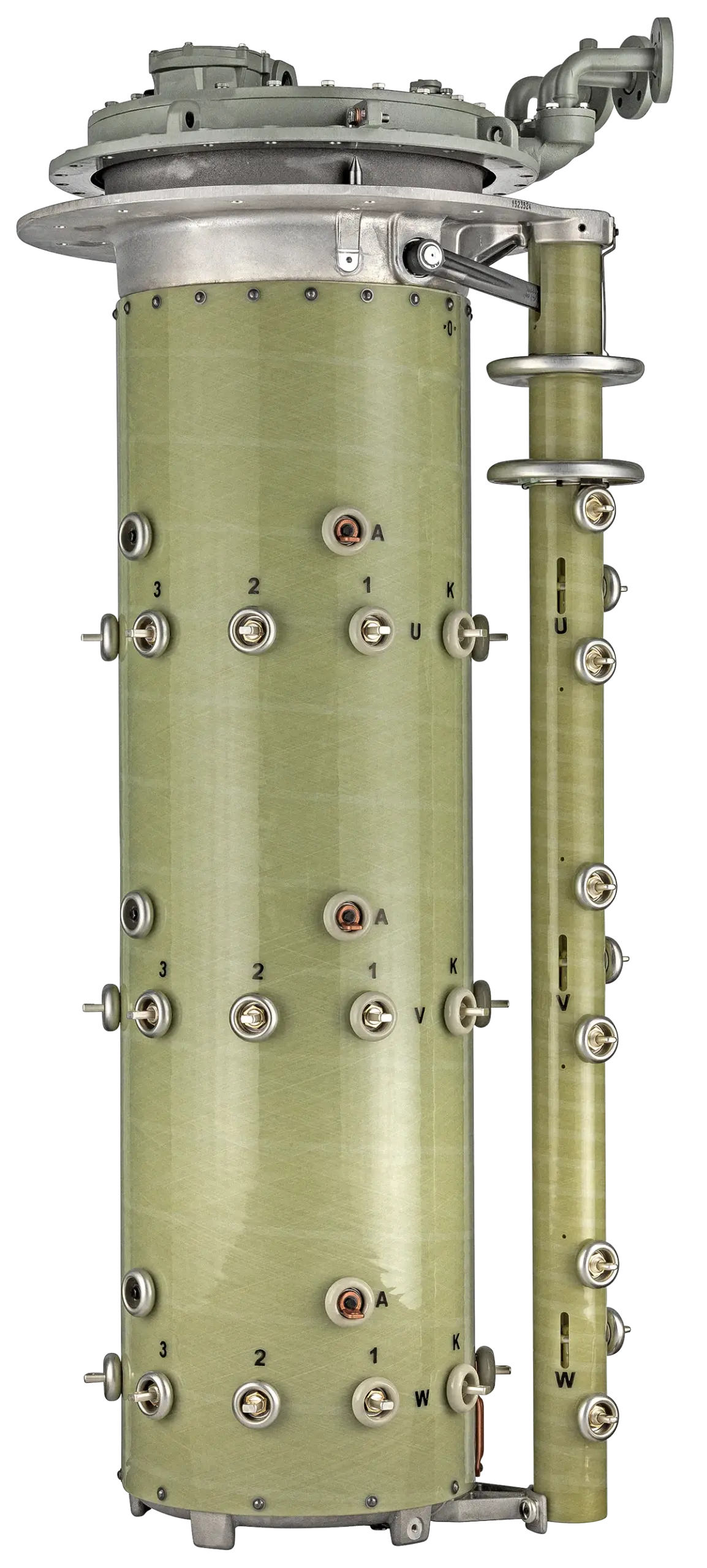
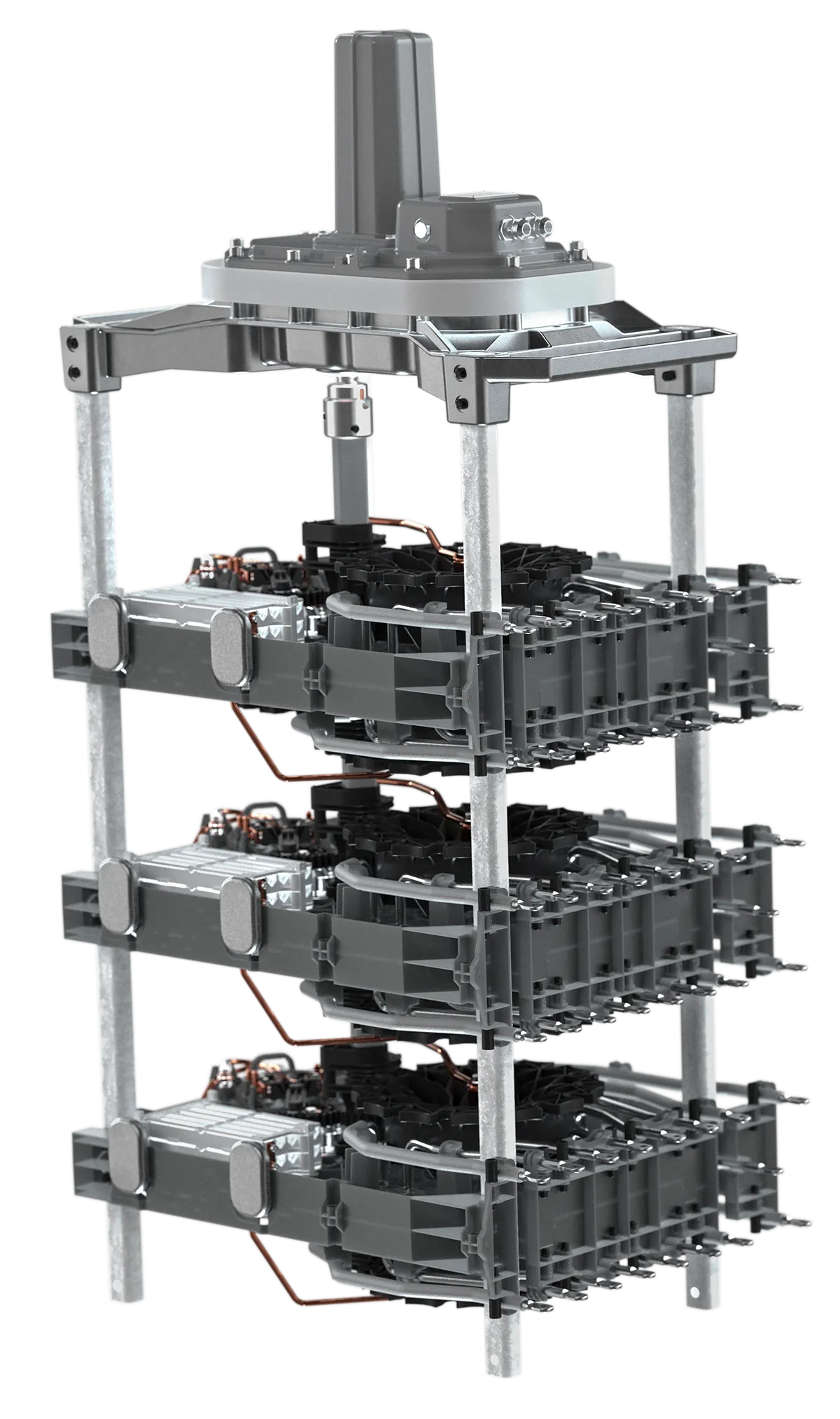
VACUTAP® VI: Fewer resources, more performance
With the VACUTAP® VI, Reinhausen engineers have taken the on-load tap-changer to a whole new level of sustainability. This tap changer shares the oil supply with the transformer and is controlled via a direct drive. This eliminates the need for additional components and saves material, reduces oil and space requirements, and allows transformers to deliver more power while maintaining the same size. Thanks to its clever design, installation is also simple and resource efficient.
25 %
less CO2 emission over the entire lifecycle compared to conventional solutions
135 kg
less material is required for the on-load tap-changer

